HNW Prospecting for Independent RIAs in Dallas

Bhavya Barot

In 2025, Dallas displaced Los Angeles as the second most active metro in the United States for new RIA formation — trailing only New York City. That single data point captures something that wealth management professionals have been watching build for years: Dallas has become one of the most significant and fastest-growing HNW markets in the country, and the advisory infrastructure is still catching up.
The Dallas-Fort Worth Metroplex is home to more Fortune 500 corporate headquarters than any other U.S. metro area except New York. It has one of the most active middle-market private equity ecosystems in the country. Its energy sector continues to produce some of the highest individual incomes and most complex wealth profiles in America. And its zero state income tax environment has made it one of the primary destinations for HNW individuals migrating out of California, Illinois, and the Northeast — arriving with established liquid wealth and, often, a desire to find a better advisory relationship than the one they left behind.
For multi-billion dollar independent RIAs, that concentration is both an extraordinary opportunity and a brutal competitive reality. The HNW wealth is there in volume. The advisory landscape is still dominated by wirehouse branches and legacy bank trust departments that cannot provide the planning depth the market demands. The firms that build systematic prospecting practices in Dallas today are entering at the exact right moment.
The Dallas HNW Wealth Landscape
DFW's wealth is deep, diverse, and distinctive. Understanding the specific segments is essential to reaching them effectively.
Corporate Relocation Executive Wealth
The Dallas-Fort Worth Metroplex has become the premier destination for Fortune 500 corporate headquarters relocations in the United States. Companies including Toyota North America, Charles Schwab, McKesson, AT&T, Goldman Sachs (major operations campus), CBRE, Kimberly-Clark, and dozens of others have established or significantly expanded their DFW presence. The combined executive workforce at these companies represents an enormous and consistently renewing source of HNW clients.
These executives arrive with specific, high-value planning needs. Equity compensation — RSUs, stock options, performance shares, deferred compensation — is the primary planning challenge for most corporate executives, and it is consistently mishandled by the wirehouse advisors who serve the majority of this population. An independent RIA who can demonstrate genuine depth in equity compensation planning, tax optimisation, and concentrated stock management immediately differentiates itself from the field.
Many of these executives relocated from markets where they had established advisory relationships that they left behind. They are making advisor decisions in a new city, often for the first time, and they are approaching those decisions with more sophistication and discernment than they brought to their first advisory relationship years earlier. They are looking for genuine expertise, transparent fees, and an advisor who treats them as a planning challenge rather than an asset figure.
Energy Sector Wealth
Texas produces the majority of domestic oil and gas, and Dallas is home to a significant concentration of energy executives, mineral rights owners, royalty holders, and private equity-backed operators. The energy sector produces some of the most complex individual wealth profiles in America — and some of the most underserved.
Energy executive compensation often combines high cash salaries, performance bonuses tied to production metrics, equity in private operating companies, and in some cases royalty interests in producing properties. The volatility of energy income — bonuses that vary by a factor of three or four depending on commodity prices — creates specific planning challenges around tax smoothing, cash management, and long-term wealth accumulation that generic financial planning does not address.
Royalty owners and mineral rights holders represent a distinctive and often overlooked HNW segment. An individual with $3M in annual royalty income from producing properties they inherited or accumulated over decades may have never worked with a wealth manager who understood their situation. The intersection of depletion allowances, royalty interest valuation for estate planning, and the strategic question of whether to sell or retain mineral interests is a planning niche that well-positioned independent RIAs can serve with genuine differentiation.
The private equity-backed energy operator — a founder who started an E&P company, grew it with PE capital, and is now approaching a second or third transaction — represents a liquidity event prospect with one of the most complex post-transaction planning profiles in any sector. Capital gains from the sale of a producing company, earnout structures, retained working interests, and ongoing royalty income all create a planning situation that requires specialised expertise.
Technology and Private Equity
The Dallas technology corridor — concentrated in Legacy West in Plano, Uptown Dallas, and the Frisco/Allen corridor — has matured significantly over the past decade. Companies including Match Group, Dialexa (acquired by IBM), Infoblox, and hundreds of growth-stage businesses have created a population of founders, executives, and early employees with meaningful equity compensation. The intersection of Dallas's low-cost operating environment, strong talent market, and proximity to PE capital has also produced a robust PE ecosystem that funds and exits technology and services businesses at a high rate.
This population's planning needs are well-defined and recurring: pre-liquidity estate planning, stock option exercise timing, post-exit capital gains management, and the reinvestment of proceeds into a diversified portfolio. Independent RIAs who understand this client profile and can reach these individuals before or immediately after their transaction win relationships that compound in value over decades.
The California Migration Wave
Texas has been the primary beneficiary of California outmigration for nearly a decade, and Dallas has absorbed a disproportionate share of that inflow. HNW individuals leaving California arrive with specific characteristics that make them exceptional independent RIA prospects.
Their wealth is established and liquid — home sales in California, vested equity from Bay Area tech companies, and accumulated investment portfolios. They are often explicitly motivated to make a fresh start with their financial relationships — part of the reason for leaving was the high cost of living, and part of that was the sense that they were paying for things they were not receiving. They have typically had at least one advisory relationship that disappointed them, and they are approaching their next one with higher standards.
Perhaps most importantly: they are already convinced of the fee-only, fiduciary value proposition. California produced the independent RIA movement in its modern form — Schwab's custodian platform, Vanguard's low-cost philosophy, the fee-only planning ethos. Many California migrants arrive in Dallas already knowing what they want from an advisor. They just need to find one.
Multi-Generational Family and Land Wealth
Texas has a long and deep tradition of family wealth — ranching, farming, oil and gas production, real estate, and manufacturing spanning multiple generations. Dallas is the financial hub for a regional economy that includes some of the oldest concentrated private wealth in the country. Multi-generational families with complex estate plans, family limited partnerships, closely held business interests, charitable structures, and the specific challenges of transitioning wealth across generations represent a significant and relationship-rich client segment.
These clients are typically not looking for an investment manager. They already have one, often multiple. They are looking for a planning relationship — an advisor who can think across the full picture of their family's financial situation, who understands the dynamics of a family enterprise, who can facilitate difficult conversations about succession and distribution, and who earns trust over years and decades. The independent RIA model, with its planning-first orientation and aligned fee structure, is the right vehicle for this work.
The Competitive Landscape for Independent RIAs in Dallas
The Dallas advisory landscape is in transition. The dominant players historically were wirehouse branches — Merrill Lynch, Morgan Stanley, UBS, and Wells Fargo each have substantial DFW operations — supplemented by the private wealth divisions of regional banks and the insurance-affiliated advisory networks that serve the middle market.
The RIA model is gaining share rapidly in Dallas for the same reasons it gains share everywhere: clients who have experienced the wirehouse model firsthand, understand its conflicts, and have the sophistication to seek something better. But the independent RIA market in Dallas is still relatively fragmented and underdeveloped compared to the size of the opportunity. There is no dominant independent firm in the $100M to $400M range that owns the market the way certain firms own specific segments in New York or Chicago.
This is the window. Independent RIAs who establish strong prospecting practices and build meaningful client relationships in Dallas over the next three to five years are planting flags in a market that will be much more contested in a decade.
The Prospecting Challenge Specific to Dallas
Dallas is a relationship market. Business is done through networks — the Young Presidents' Organization, the Salesmanship Club, the Dallas Regional Chamber, the Petroleum Club — and the instinct of many advisors is to invest entirely in building presence within these networks and letting referrals flow naturally.
That approach works over time. It does not work at the speed most firms need to grow. And it has a specific structural limitation: it reaches the people who are already in your network, which tends to be a relatively homogeneous set of contacts at a similar career stage and wealth level.
Systematic outbound prospecting reaches qualified HNW individuals who are not yet in your network — corporate executives who arrived in Dallas six months ago from Toyota's relocation, energy royalty owners who have never been approached by a planning-focused advisor, California migrants who just closed on their Frisco home and are actively looking for a wealth manager. These are high-probability prospects who exist outside the referral network, and targeted outreach is the only way to reach them.
What a Dallas HNW Client Relationship Is Worth
A corporate executive at Charles Schwab's new Dallas campus with $4M in investable assets, managed at 0.85%, generates $34,000 per year in advisory revenue. An energy executive with $8M in complex assets generates $68,000. A post-liquidity business founder with $12M in proceeds from a transaction generates $100,000 or more in the first year alone — before considering the value of referrals they will generate within the tight-knit Dallas business community.
The question is whether your firm is having enough of those conversations.
How Spaces Works for Dallas-Area RIAs
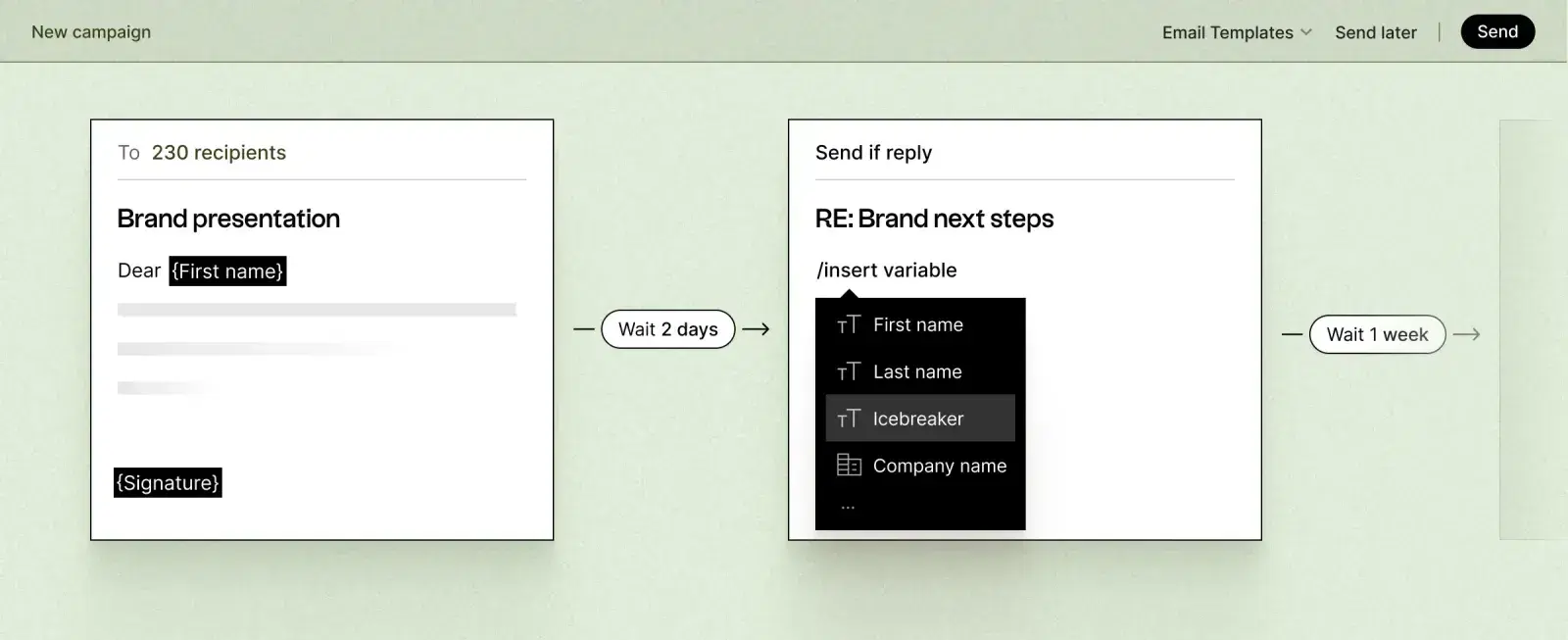
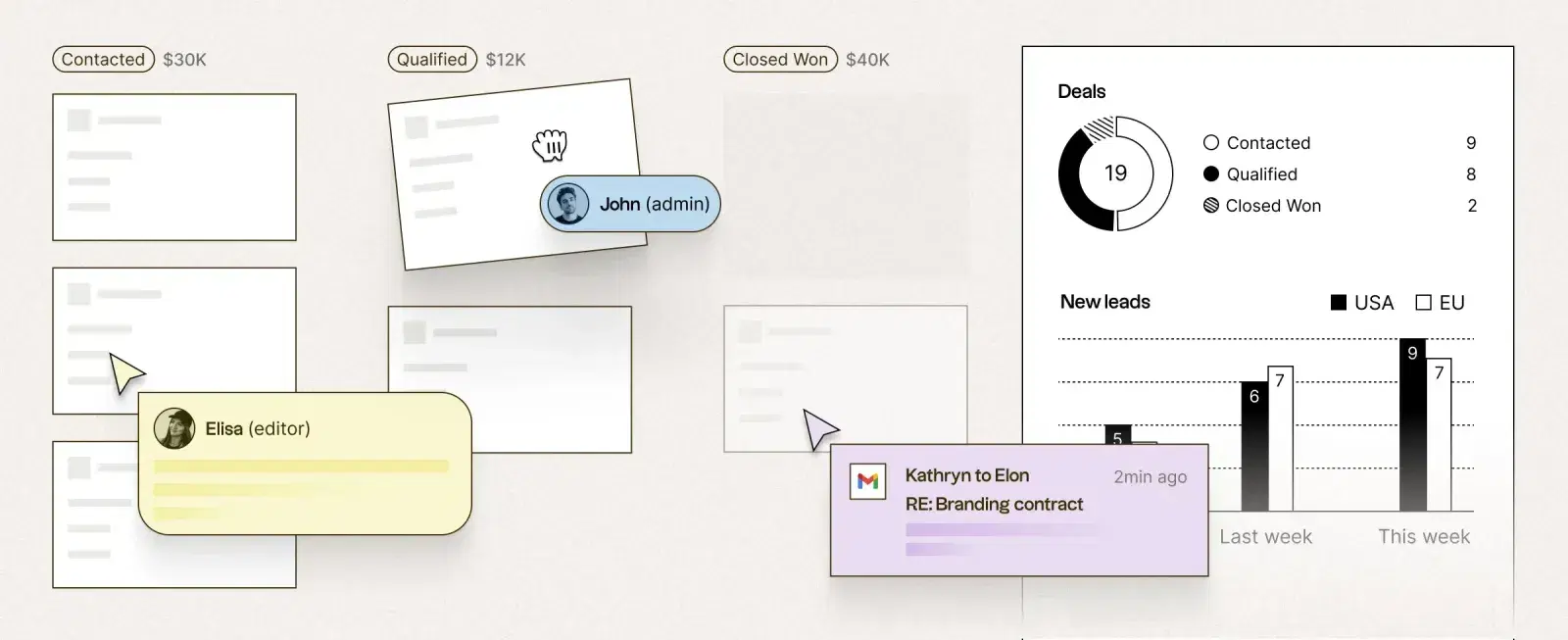
Spaces is a fully managed HNW meeting booking service for independent RIAs. Spaces identifies high-net-worth prospects who match your firm's target profile in the Dallas-Fort Worth Metroplex — by professional background, wealth signals, geography, and other criteria — runs personalised outbound outreach on your behalf, manages all responses, and books confirmed meetings directly into your calendar.
Every prospect who reaches your calendar has confirmed $500,000 or more in investable assets and expressed genuine openness to a wealth management conversation.
Profiles of Ideal Spaces Clients in Dallas
The recently independent advisor. A breakaway from a wirehouse managing $175M who brought their existing book but needs to build a new client acquisition system from scratch. Spaces generates a consistent flow of new HNW conversations — four to six per month — that supplement the organic growth from referrals within the existing client base.
The energy sector specialist. A $240M RIA with deep expertise in oil and gas royalty planning and energy executive compensation. Their biggest challenge is reaching the right prospects systematically. Spaces targets energy professionals and royalty owners in the DFW area with messaging built around the firm's specific planning expertise.
The corporate relocation specialist. A firm of $310M that has developed a strong practice serving executives from Fortune 500 companies with complex equity compensation. Spaces runs targeted outreach to executives at the major DFW corporate campuses — Toyota, Schwab, McKesson — who match the firm's ideal client profile.
Frequently Asked Questions
Does Spaces work specifically in the Dallas-Fort Worth market?
Yes. Spaces operates across Dallas, Fort Worth, Plano, Frisco, McKinney, Allen, Irving, Arlington, Southlake, Westlake, Flower Mound, and the broader DFW Metroplex. Outreach is precisely targeted to the geography your firm serves.
What types of HNW prospects can Spaces target in Dallas?
Common profiles include corporate executives from relocated headquarters, energy professionals and royalty owners, tech founders and PE-backed executives, California in-migrants with established wealth, and multi-generational family business owners.
How is Spaces different from hiring a business development person?
A part-time business development hire in Dallas — someone who understands wealth management, can write outreach, and book meetings, cannot run the volume and consistency of targeted outreach that Spaces provides.
How long before the first meeting is booked?
Spaces typically launches within two to three weeks and delivers first qualified meetings within 30 to 45 days.
Is there a setup fee?
Reach out to discuss pricing and availability in the Dallas market.
The Bottom Line for Dallas RIAs
Dallas is the growth market of the decade for independent RIAs. The HNW wealth is substantial and still accumulating. The advisory landscape is dominated by institutions that cannot provide the planning depth the market demands. The window for independent firms to establish themselves before the market matures and competition intensifies is open right now.
The firms that will own the Dallas HNW market in 2030 are the ones building systematic prospecting practices today. Spaces is the fastest path to a consistent pipeline of qualified conversations with the HNW prospects your firm is built to serve.