Your Sales Team Is Spending Less Than 25% of Their Time on Business Development

Bhavya Barot

Ask most business leaders how much time their sales team or BD professionals spend on actual business development — finding new prospects, reaching out, building new relationships — and they'll guess somewhere between 20 and 25 hours a week.
The research consistently says otherwise.
The real number is closer to 10 hours per week. About 25% of a standard work week actually goes toward activities that generate new customers.
| Source | % of Week on BD | Hours/Week |
|---|---|---|
| Salesforce (2023) | 28% | ~11 hours |
| Bain & Company (2026) | 25% | ~10 hours |
| HubSpot (2026) | ~25% | ~10 hours |
When you share this with a managing partner, there's usually a pause. Then: *"Yeah, that tracks."*
Because once you break down what fills the other 30 hours, it becomes painfully obvious.
Where the Other 30 Hours Go
Prospecting Research — 11+ Hours/Week
The first chunk goes to figuring out who to pursue.
Building lists. Finding the right contacts. Deciding who fits your target customer profile. Then researching each prospect well enough to have a credible, relevant first conversation — their company, their revenue, their growth stage, their professional background, their business challenges.
82% of top performers say they always research before reaching out. Nobody disputes this is important work. But 49% of BD professionals say research is the most time-consuming part of their role, and 67% say they spend 11+ hours per week on it alone.
Outreach Volume — 10–15 Hours/Week
The second chunk goes to the actual outreach: drafting emails, following up, sending LinkedIn messages, leaving voicemails, building sequences manually.
The math is brutal. At the volumes required to maintain a healthy sales pipeline, genuinely personalized outreach is impossible to do manually at scale. So most BD teams default to templates. Response rates drop. Everyone blames the market.
It's not the market. It's the workflow.
You're asking human sales professionals to do a volume job and a quality job simultaneously. They can only pick one.
Admin and CRM — 5–20 Hours/Week
Notes before and after calls. CRM data entry. Pipeline updates. Reporting.
On the low end, this consumes 5 hours per week per person. On the high end — at companies with complex setups — sales professionals spend 10–20 hours on administrative tasks that have nothing to do with bringing in new revenue.
What This Costs Your Firm
The dollar figure makes the problem concrete.
| Cost Basis | Monthly per Sales Professional | Annual per Sales Professional |
|---|---|---|
| Base rate ($30/hr × 30 hrs × 4.33) | $3,888 | $46,656 |
| Fully loaded ($50/hr × 30 hrs × 4.33) | $6,495 | $77,940 |
For a company with four people doing BD work, that's between $15,552 and $25,980 per month spent on activities that aren't generating new customer relationships.
Put that next to the conversation happening at almost every business right now: *"Headcount is flat, but we need to grow revenue."* When your budget for new hires is zero and your growth target just increased, that $6,000 per person you're spending on non-BD work isn't a line item — it's the difference between hitting your target and explaining why you didn't.
The Three Bottlenecks, and How Spaces Addresses Each
Prospecting and research. Valora identifies and qualifies prospects matching your ICP continuously, pulling from 50+ data sources. It builds enriched profiles that include company signals, professional background, recent business events, and behavioral intent data. What would take a sales professional 15–20 minutes per prospect to research manually is done automatically for every prospect in your pipeline.
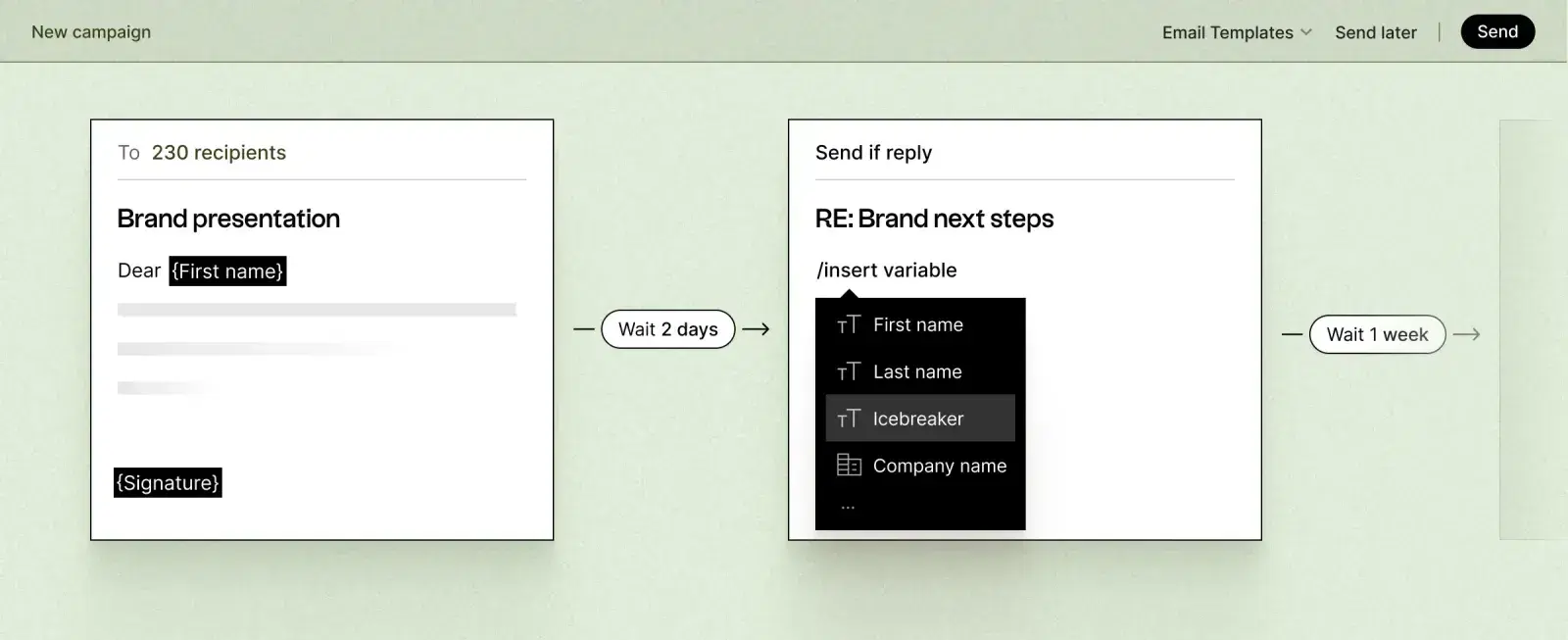
Personalized outreach at scale. Valora writes outreach based on the research it conducts on each individual prospect — not template personalization, but real contextual messaging that references what's actually happening in their business. It manages multi-channel sequences across email and LinkedIn, handles follow-ups, and books discovery calls directly to your sales team's calendars.
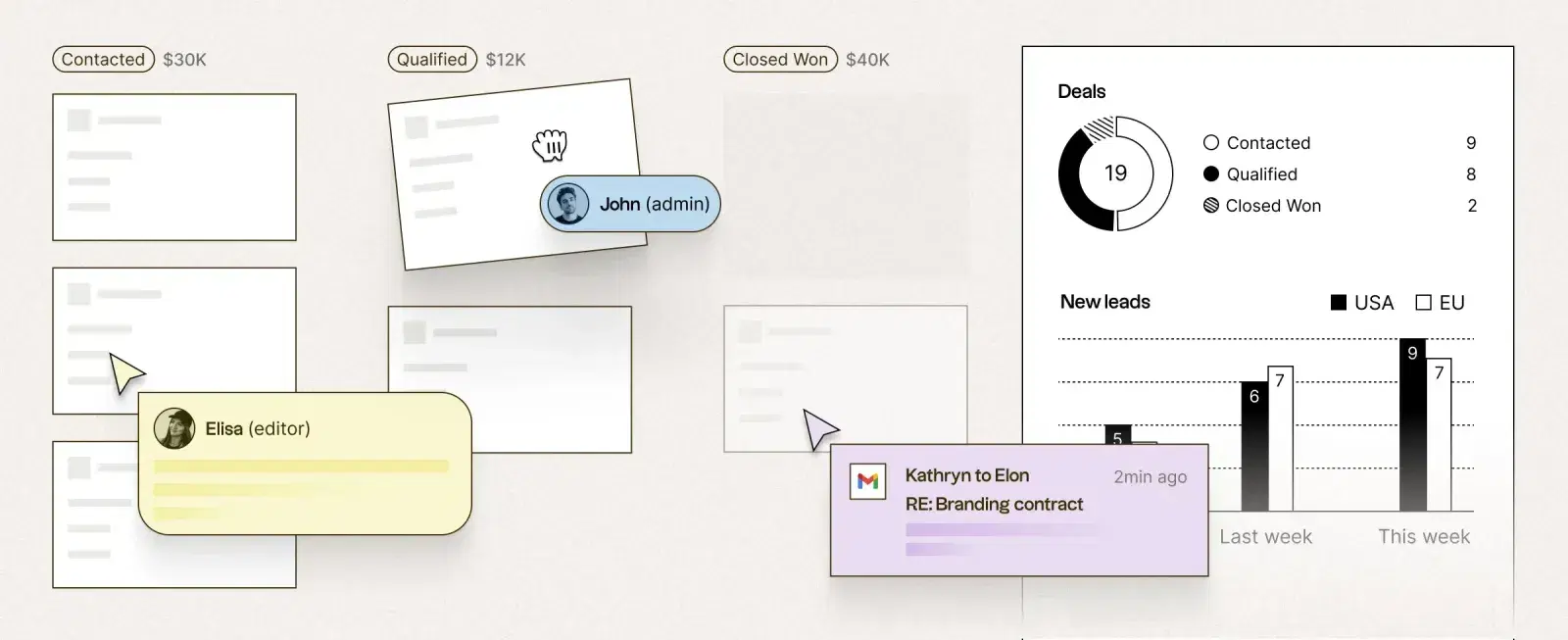
Admin elimination. Every prospect interaction is logged to your CRM automatically. No manual data entry, no missing notes, no stale pipeline records. Your team always has full context before any conversation.
What Happens When Sales Professionals Get Their Time Back
The sales professionals I've spoken to didn't take their roles because they love building prospect lists. They took them because they're exceptional at building trust, having meaningful business conversations, and guiding prospects through complex decisions.
When you remove 30 hours of research, outreach, and admin from their week, they become what you hired them to be.
The 10 hours of real BD work becomes 40. The pipeline they were managing manually becomes predictable. And the company that was growing cautiously starts growing at a pace that matches its actual market opportunity.
Calculate Your Company's BD Productivity Gap
Step 1. Track actual BD hours per sales professional for one week — calls, outreach, and relationship-building with new prospects only.
Step 2. Calculate non-BD hours: `40 – BD Hours = Non-BD Hours per Person`
Step 3. Calculate monthly cost: `Non-BD Hours × Fully Loaded Rate × 4.33`
Step 4. Multiply by your BD team headcount.
If that monthly number exceeds the cost of an AI prospecting platform, the math favors automation.
See how Spaces helps businesses reclaim BD time and grow revenue.