Why Your Sales Pipeline Is Broken — And How to Fix It

Bhavya Barot
Most businesses that are serious about growth share a familiar story.
A marketing effort, a partner referral, a webinar, or a LinkedIn campaign generates inbound interest. The lead looks strong on paper. Then three days later, half those prospects still haven't been contacted. A few weeks on, most of the ones who were contacted never made it to a discovery call. Nobody can explain exactly why.
That's when the internal finger-pointing starts.
The sales team says the leads weren't qualified enough. Marketing asks why the good leads that did reach the pipeline seem to stall. Neither side is entirely wrong.
The problem isn't effort. It's structure.
Three Problems Killing Your Prospect Pipeline
Problem 1: Slow Speed-to-Lead
Speed-to-lead is the gap between when a prospect expresses interest and when your company delivers a meaningful first response. In B2B business development, that window is short.
Research published in the Harvard Business Review found you are 100 times more likely to connect with a prospect if you respond within 5 minutes compared to 30 minutes. By the next business day, the probability of a successful first conversation has collapsed. That prospect has likely spoken with another vendor, or simply moved on.
The average business takes hours — sometimes days — to respond to inbound interest. The gap between what prospects expect and what most companies deliver is the reason so many leads convert for someone else.
Problem 2: Inconsistent Qualification
Not every inbound inquiry is a fit. The problem is that most companies don't have a systematic process to evaluate fit before an inquiry reaches a sales professional's calendar.
When sales professionals handle qualification manually, standards are inconsistent. A prospect who's far outside the company's target revenue range gets a full first meeting. A strong-fit prospect gets deprioritized because the sales professional was traveling. Up to 60% of BD capacity gets spent on prospects who were never a realistic match.
Meanwhile, the highest-quality prospects — those who fit your ICP precisely — wait too long and book a meeting with someone faster.
Problem 3: Abandoned Opportunities
B2B relationships typically require 5 to 12 meaningful touchpoints before a prospect is ready to engage seriously. Most companies never come close:
- 70% of BD professionals follow up once and drop the prospect if there's no response
- 48% don't follow up at all after the first outreach attempt
- Only 8% persist to five or more touchpoints
Yet research consistently shows that 25–40% of eventual customers were originally cold or stalled prospects who needed consistent nurturing over time. The pipeline exists. It's just not being worked.
Why These Problems Can't Be Solved by Hiring
All three are capacity problems. Your BD team is managing everything manually and doesn't have bandwidth to do any of it at the standard it deserves.
But there's a deeper issue: most of these problems can't be hired away.
Every business we've spoken with is under the same pressure: grow revenue without growing the team. Budget is flat, but the growth target keeps increasing. Even at large companies, you can't staff your way to a solution when your total addressable market demands thousands of touchpoints and your team has capacity for dozens.
The answer isn't more headcount. It's building leverage — getting dramatically more output without proportional team growth.
How to Fix Each Problem
Fix 1: Automate First Response
The right system responds to prospect inquiries in under 60 seconds, across every channel. When a prospect submits a contact form, requests information, or reaches out via LinkedIn, they receive an immediate, relevant response that acknowledges their specific situation and keeps the conversation moving.
No waiting. No missed inquiries that arrived after hours. No callbacks that land 48 hours too late.
Fix 2: Implement AI-Powered Qualification
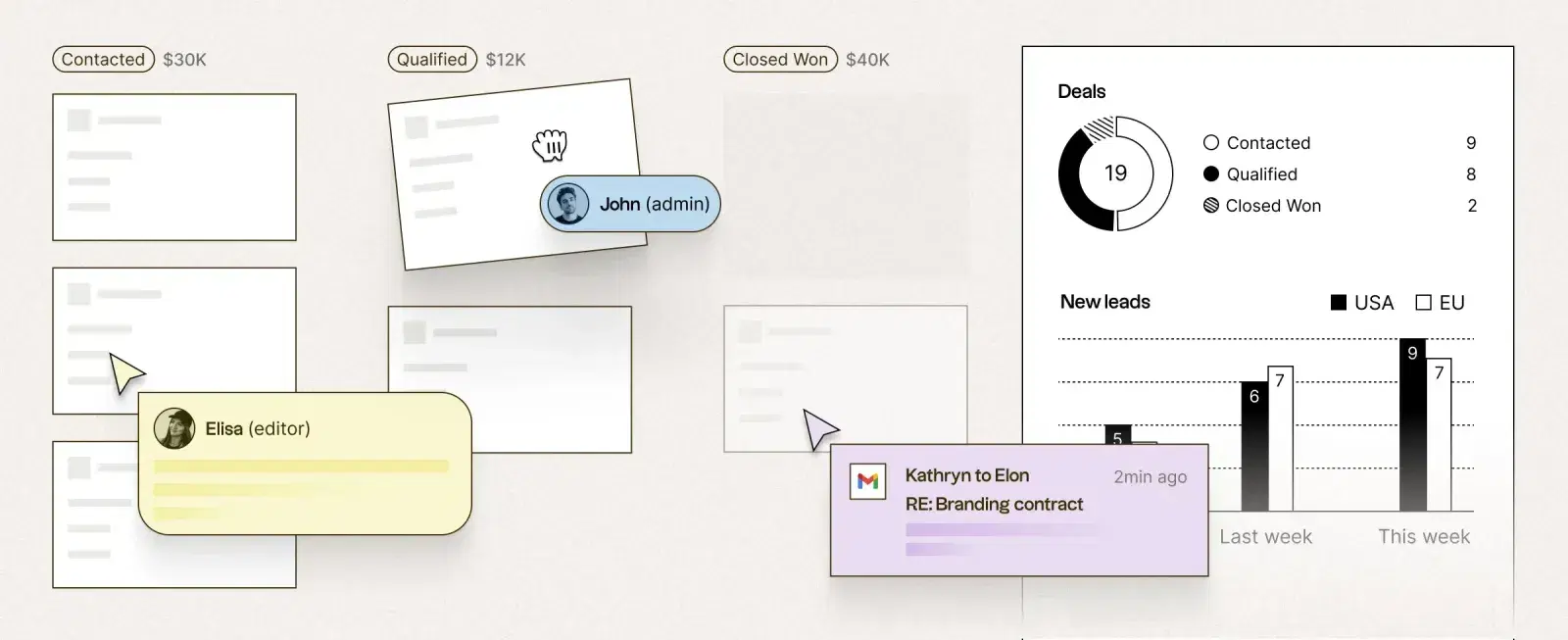
Before any inquiry reaches a sales professional, AI can evaluate fit — asking the right qualifying questions, scoring the prospect against your ICP criteria, and passing only the highest-priority opportunities to your team, with full context already in your CRM.
Sales professionals stop spending time on prospects who were never going to become customers. Every first conversation starts from a position of knowledge and mutual fit.
Fix 3: Run Automated Multi-Touch Nurture
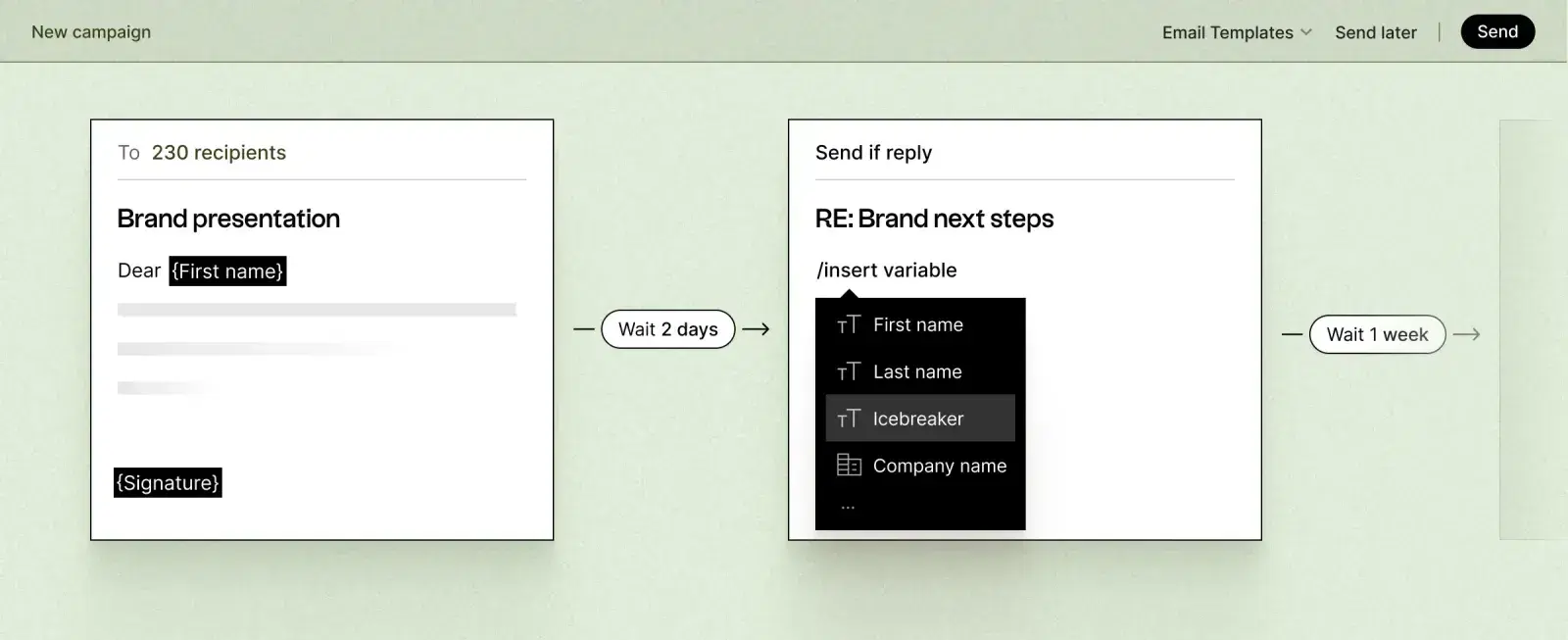
Every prospect receives a personalized follow-up sequence that runs automatically in the background — across email, LinkedIn, and other channels — adapting based on engagement signals.
The persistent, multi-touchpoint follow-up that most BD teams are too stretched to execute happens without manual effort.
| Metric | Before Automation | After Automation |
|---|---|---|
| First response time | Hours to days | Under 60 seconds |
| Qualification consistency | Variable, advisor-dependent | Systematic, ICP-scored |
| Follow-up persistence | 70% stop at one touchpoint | Automated 5–12 touch sequences |
How Spaces Solves This
Valora, Spaces' AI prospecting and outreach agent, addresses all three problems in a single system designed specifically for B2B businesses.
She identifies and qualifies inbound interest, responds immediately with contextually relevant messaging, runs personalized multi-channel follow-up sequences, and escalates only the highest-priority opportunities to your sales team — complete with CRM context already filled in.
Your sales professionals stop triaging inbound and start having the discovery calls that actually matter.
For businesses that have deployed Valora, the pattern is consistent: faster first-response times, higher first-meeting conversion, and a pipeline that doesn't depend on any single sales professional's available bandwidth.