AI Digital Workers for B2B Sales: The Complete Guide (2026)

Bhavya Barot
While sales professionals focus on discovery calls, customer relationships, and complex sales conversations, AI digital workers handle the prospecting research, outreach execution, follow-up sequences, and CRM updates that consume most of a typical BD week.
The result is more qualified meetings, faster pipeline velocity, and measurable revenue growth — without proportional headcount growth.
What Are AI Digital Workers?
AI digital workers are sophisticated AI agents built on artificial intelligence, machine learning, and natural language processing. Unlike traditional automation tools that follow rigid, predetermined scripts, digital workers adapt to context, learn from interactions, and make informed decisions within defined parameters.
For B2B businesses, a digital worker can:
- Identify business prospects matching your ICP from 50+ data sources
- Enrich each prospect with company signals, professional context, and behavioral intent data
- Score and prioritize prospects based on fit and likelihood to engage
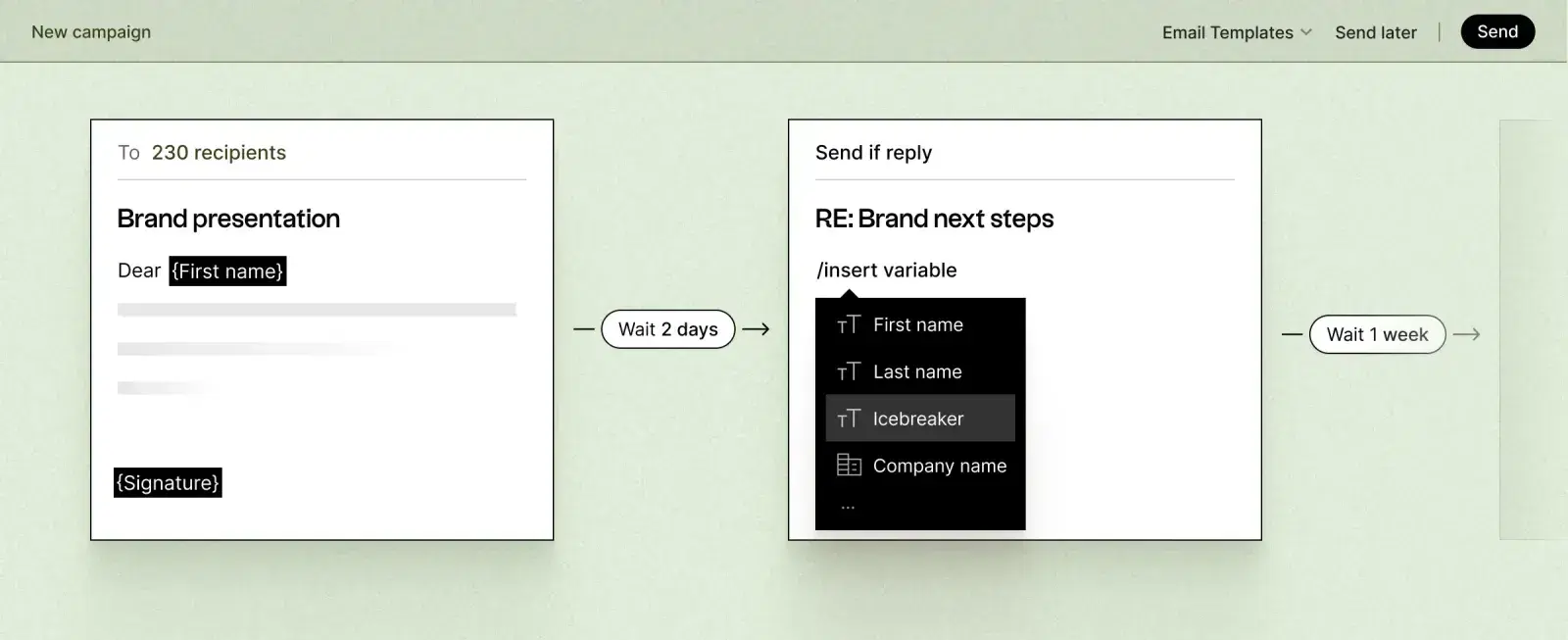
- Write and send personalized outreach based on real-time research
- Manage multi-channel sequences and follow-up autonomously
- Book discovery calls directly into sales calendars
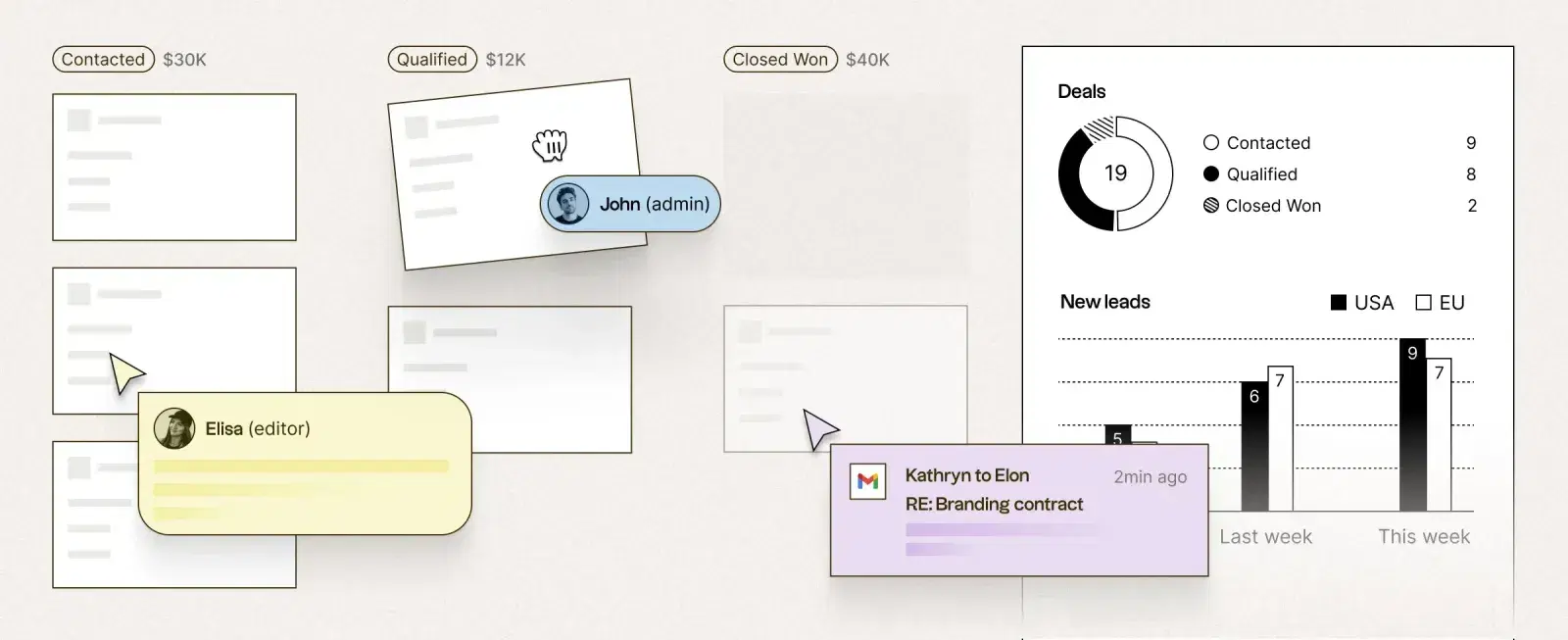
- Log all prospect activity to your CRM without manual entry
How Digital Workers Differ from Traditional Automation
Traditional automation follows predetermined rules. If a prospect opens an email, trigger a follow-up after three days. Digital workers use AI-powered reasoning to adapt to new information.
When a prospect responds with an objection, a digital worker understands the context and adjusts the conversation — instead of breaking the workflow or immediately handing off. When a company signal fires for a prospect in your pipeline, a digital worker can trigger relevant, timely outreach that references that specific context rather than sending a generic next-step message.
The difference in output quality is significant. Traditional automation produces predictable, template-driven engagement. Digital workers produce context-aware, research-driven engagement that actually gets responses.
How Spaces Approaches Digital Workers for B2B Businesses
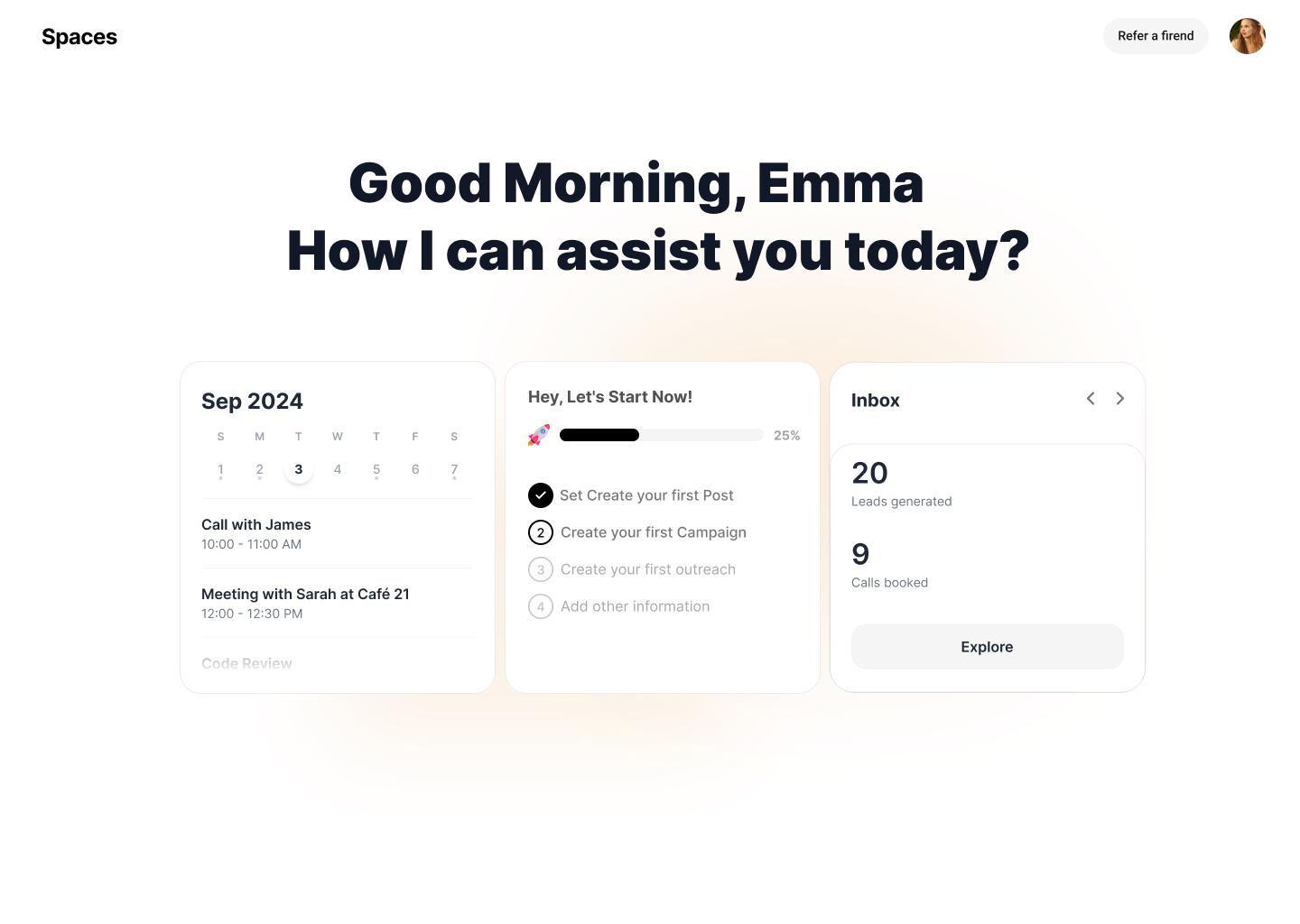
Spaces has built two AI digital workers specifically for B2B business development.
Valora handles the outbound BD motion end-to-end. She identifies prospects that match your ICP, enriches their profiles with company signals and professional context, writes personalized outreach for each individual based on that research, and manages multi-channel sequences across email and LinkedIn. She handles follow-ups automatically and books meetings directly into your sales team's calendars — all logged to your CRM in real time.
Vera, Spaces' AI Chief of Staff, manages the downstream intelligence layer. She generates pre-meeting preparation briefs before discovery calls, extracts action items from meetings, coordinates follow-through on commitments, and manages the operational work that keeps sales professionals organized and effective.
Both work as a connected system — the prospecting intelligence Valora builds feeds into the meeting preparation and follow-through Vera manages. Sales professionals walk into every first conversation informed, and leave every meeting with next steps already tracked.
Core Use Cases in B2B Business Development
Outbound Prospecting
Valora identifies qualified business prospects continuously, building enriched profiles and initiating personalized outreach. This replaces the 11+ hours per week sales professionals typically spend on manual prospect research and list-building — and produces higher-quality, more targeted outreach than any manual process can sustain at scale.
Lead Qualification
Before any prospect reaches a sales professional's calendar, Valora scores and qualifies based on your company's ICP criteria: target revenue level, professional profile, relevant company signals, behavioral intent. Sales professionals only spend time on the highest-priority opportunities, with full context already prepared.
Multi-Touch Follow-Up
Consistent follow-up across 8–12 touchpoints — the standard needed to convert a cold B2B prospect into a first meeting — happens automatically. No sales professional needs to manually track which prospect is due for which message and on which channel. The follow-up most BD processes never achieve is executed without human effort.
CRM Data Enrichment
Every prospect interaction is logged automatically. Records stay current and complete. Pipeline reporting is accurate. And sales professionals walk into every conversation with full context on prior touchpoints, responses, and prospect signals.
Discovery Call Preparation
Vera generates pre-meeting briefs automatically before every discovery call — pulling in the prospect's professional background, recent company signals, prior interaction history, and relevant context. Every first conversation starts from a position of genuine knowledge.
How to Implement AI Digital Workers at Your Business
Phase 1: Start With One High-Friction Process
Resist the instinct to automate everything at once. Pick one bottleneck first.
For most businesses, the highest-friction bottleneck is one of three:
- Finding new prospects who match the ICP (the research and identification bottleneck)
- Consistent follow-up at the volume needed to maintain a healthy pipeline (the outreach bottleneck)
- Responding to inbound interest quickly enough that prospects don't go cold (the speed-to-lead bottleneck)
Pick the one that's costing you the most, deploy a focused solution, measure results, then expand.
Phase 2: Configure and Train
Digital workers improve significantly with context. Before deployment:
- Define your ICP clearly — target revenue level, professional profile, geographic focus, company stage signals
- Document your positioning and what differentiates your business for each segment
- Configure CRM integration so all activity is logged to the right records
- Define what a "qualified" prospect looks like so scoring logic is calibrated correctly
The more context you provide upfront, the better the output from day one.
Phase 3: Build Human Oversight Into Early Deployment
During the first 30–60 days, review outgoing messages before they send automatically. This lets you correct tone, positioning, or factual errors early — before patterns become embedded in the AI's behavior.
As confidence in the output quality grows, you can transition toward full autonomy. Most businesses are comfortable with unsupervised outreach within 60–90 days of deployment.
Measuring Success
Efficiency metrics. Time reclaimed from manual prospecting and admin, prospect profiles enriched automatically per week, follow-up sequences completed without human input.
Pipeline metrics. Qualified discovery calls generated per month, prospect-to-meeting conversion rate, follow-up touchpoints completed, CRM data completeness.
Business outcomes. New revenue from AI-assisted pipeline, cost per discovery call compared to manual process baseline, time from initial prospect identification to first meeting.
Organizations implementing AI digital workers effectively typically see 40–60% reductions in time spent on repetitive BD tasks and 20–40% increases in qualified meetings booked within the first 90 days.
Common Pitfalls to Avoid
Over-automation of relationship-sensitive touchpoints. B2B relationships are built on trust and human connection. Use digital workers to automate research, early-stage outreach, and administrative tasks. Keep sales professionals personally engaged in discovery conversations, complex follow-through, and customer relationship management.
Starting with too many workflows simultaneously. Implementing multiple automated processes at once makes it impossible to know what's working. Start with one focused workflow, prove it, then expand.
Deploying against poor data. Digital workers are only as accurate as the data behind them. If your CRM has outdated records or incomplete prospect profiles, AI-generated personalization will miss the mark. Invest in data quality before deploying outreach at scale.
Skipping the governance setup. B2B BD carries compliance considerations. Configure outreach guardrails, review processes, and audit trails from day one — don't add them after the fact.
Spaces was built to run at the center of B2B business development, not as a bolt-on to an already fragmented tool stack. Valora and Vera work as connected digital workers that handle the execution and intelligence layers — so your sales professionals can focus on the conversations that win new deals.
Talk to Spaces about deploying AI digital workers at your business.