AI Won't Replace Your Sales Team — But It Will Give Them Leverage

Bhavya Barot
There's been a lot of noise about AI replacing sales professionals.
That's not what's happening. And it's not what the businesses actually deploying AI are asking for.
After speaking with hundreds of business leaders and sales directors about AI in business development, the pattern is clear. Almost none of them were looking to reduce their teams. They were looking to scale without growing headcount — because they were being asked to hit more aggressive revenue growth targets with the same team they had.
What Businesses Actually Want from AI
The real conversations sound like this:
*"We need to grow our new customer pipeline and we don't think we can keep doing it by adding BD headcount every year."*
*"We want to run a more systematic outbound operation without having to train and ramp two new people every cycle."*
*"We're being asked to grow revenue 30% this year with the same team. Something has to change."*
In practice, that means using AI to handle:
- Finding and enriching B2B prospect profiles with company signals, contact data, and behavioral intent
- Drafting and delivering personalized outreach across email and LinkedIn
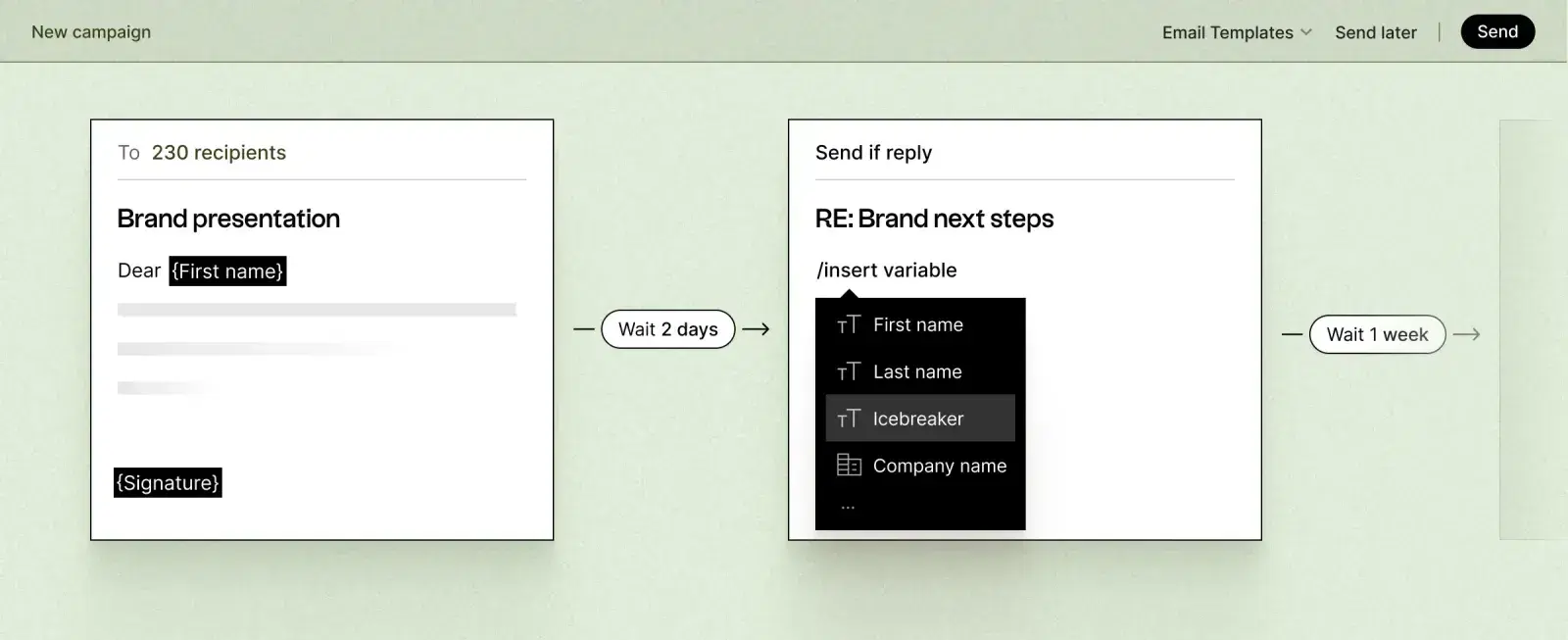
- Managing multi-step follow-up sequences automatically
- Qualifying inbound inquiries before they reach a sales professional
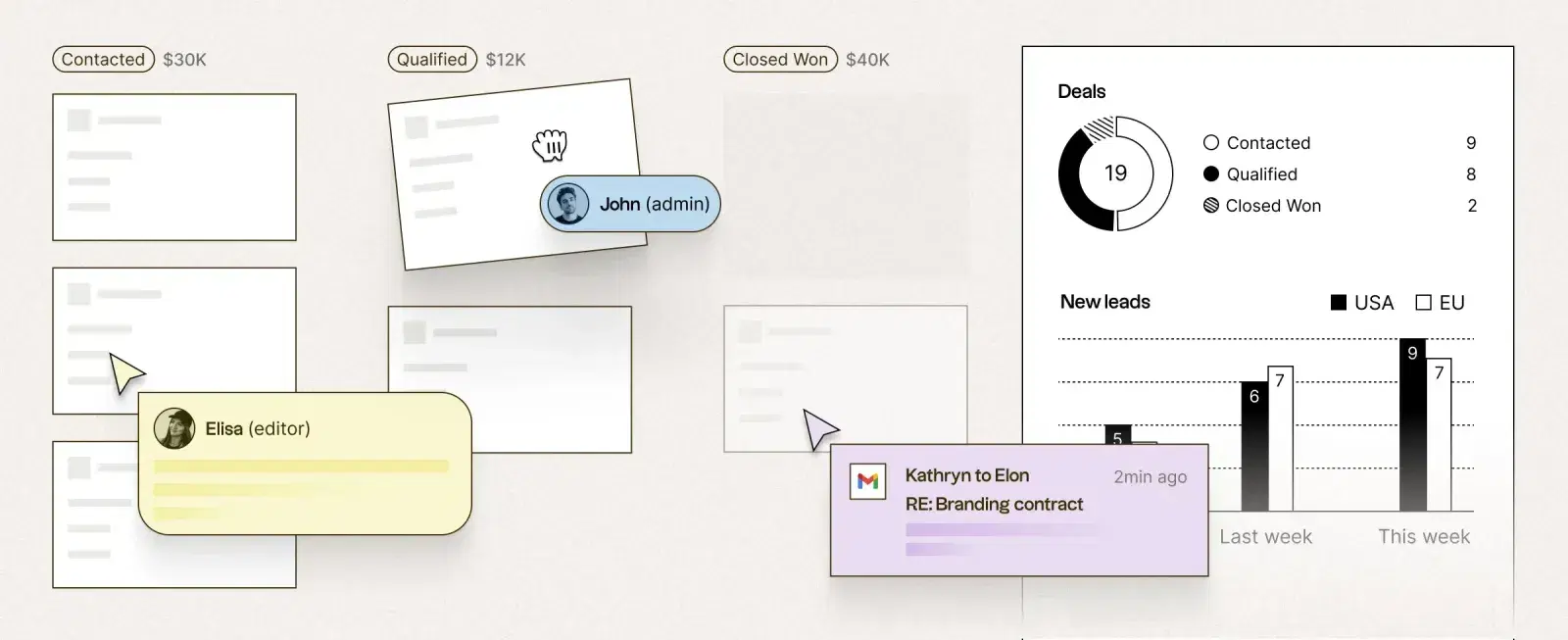
- Booking discovery calls and logging all activity to the CRM
This frees sales professionals to focus on:
- First discovery calls and deeper prospect relationships
- Complex sales conversations that require genuine human judgment
- Customer retention and service quality that drives referrals
- Strategic decisions about which niches and market segments to pursue
When "replace the team" does come up, here's what those businesses are actually replacing: slow manual outreach processes, offshore BD contractors, and 48-hour response times that are killing their first-meeting conversion rates. Not their sales professionals.
What AI Does Better Than Humans in B2B BD
| AI Excels At | Human Sales Professionals Excel At |
|---|---|
| Speed and 24/7 availability | Building trust and rapport |
| Consistent follow-up at scale | Handling complex objections |
| Processing large prospect volumes | Nuanced, context-sensitive conversations |
| Personalisation across large audiences | Strategic relationship navigation |
| Instant response to inbound interest | Reading emotional cues and adapting in real time |
The most effective businesses use both. AI handles the volume and consistency layer. Sales professionals handle the complexity and connection layer.
The Real Problems AI Solves for Businesses
Scale pipeline without scaling headcount. Business leadership is under pressure to grow without increasing the cost base. AI allows companies to run outbound prospecting at a volume and consistency their existing team never could — without hiring. This is what many growing businesses describe as an inflection point: the moment they need to grow revenue without growing the org chart.
Convert more prospects, faster. Every company has prospects who never got followed up with, or received a response days after the initial inquiry when the moment had passed. Businesses that have deployed AI prospecting have gone from 24-hour-plus response times to near-instant engagement. That single change meaningfully improves first-meeting conversion rates.
Consolidate the tool stack, not the people. Most businesses are running 8–15 disconnected tools — a CRM that doesn't talk to the email platform, a data enrichment tool that doesn't sync with the outreach sequencer, a calendar tool that requires manual handoffs. AI platforms like Spaces consolidate that stack into one system. Companies replace the friction and complexity, not the people doing the work.
Run personalization at scale. Business leaders know what great outreach looks like. They want to run personalized, multi-touch campaigns with segment-specific messaging for different prospect types — enterprise decision-makers, business owners approaching a growth phase, executives in career transition. They just couldn't execute it manually at scale. AI makes it possible.
How to Assess Whether AI BD Tools Are Right for Your Business
Do you have a clear value proposition? Businesses that see the best results have a specific target customer profile and a compelling reason why they're the right vendor for that customer. If you know who you're targeting and why they should choose you, AI helps you reach more of them faster. If you're still working that out, AI outreach won't solve it.
Do you know what specific problem you're solving? Get specific. Are sales professionals wasting time on unqualified prospects? Is follow-up falling through the cracks? Are inbound inquiries going cold before anyone responds? The more clearly you can define the bottleneck, the easier it is to design a pilot that proves value within 90 days.
Do you have measurable success criteria? Define your proof points upfront — discovery calls booked, qualified prospect response rates, pipeline growth. Make sure everyone involved agrees on those metrics before you start. Deployments that fail almost always fail because success was never defined clearly.
Is there a clear owner? AI BD tools require someone to own the setup, review early performance, and optimize as you go. Without a dedicated owner, the system goes underused and the experiment fails before it has a real chance.
The Hybrid Model That Works
The most effective businesses in 2026 run AI alongside their human BD capacity. The AI handles prospecting research, outreach volume, and follow-up consistency. The sales professionals handle live discovery conversations, relationship development, and the complex judgment calls that build lasting customer trust.
This isn't about replacement. It's about specialization. Each side does what it does best.
Spaces was built for this model. Valora handles prospect identification, scoring, personalized outreach, and meeting booking. Your sales professionals handle the conversations that close new deals.