How to Make Your Automated LinkedIn Outreach Feel Personal at Scale

Bhavya Barot
Automated LinkedIn outreach has a reputation problem — and most of it is deserved.
The average HNW professional on LinkedIn receives multiple automated connection requests and follow-up messages every week. They recognize the pattern immediately. The generic connection note. The "I'd love to connect and learn more about your work" opener. The pitch that arrives 48 hours after the connection is accepted.
The result: response rates for automated LinkedIn outreach have declined sharply as the approach has become commoditized. The advisors who assume automation means low personalization are right — their automation doesn't work.
But automated outreach can feel genuine. The difference is in the inputs.
What Makes Automated Outreach Feel Robotic
Before fixing the problem, understand exactly what signals reveal that a message was automated.
The context is wrong or missing. The message could have been sent to anyone. It references nothing specific about this person, their firm, their recent activity, or why you're reaching out to them specifically.
The sequence is too fast. Connection accepted Monday, pitch in the inbox Tuesday. Human advisors don't operate this way. The speed itself is a tell.
The opening is a template. "I came across your profile and was impressed by your background" reads as exactly what it is. Nobody writes that to someone they actually read.
The ask is too big, too soon. A first message that requests a 30-minute call from a cold connection asks for more trust than has been established. The person hasn't given you any reason to invest 30 minutes yet.
The Five Inputs That Make Automation Feel Human
1. Real Research, Not Template Personalization
Template personalization swaps in a first name or company name from a spreadsheet. Real personalization references something specific and current about the prospect.
- Their recent job change or promotion
- A post they published and why it was relevant
- Their firm's recent news
- A specific aspect of their professional background that connects to why you're reaching out
- A mutual connection or shared context
This requires genuine research — but it doesn't require manual research for every contact. Valora conducts this research automatically for each prospect before any message is sent, pulling from live data sources to generate outreach that reads like it came from someone who actually looked at the profile.
2. Natural Timing Between Touchpoints
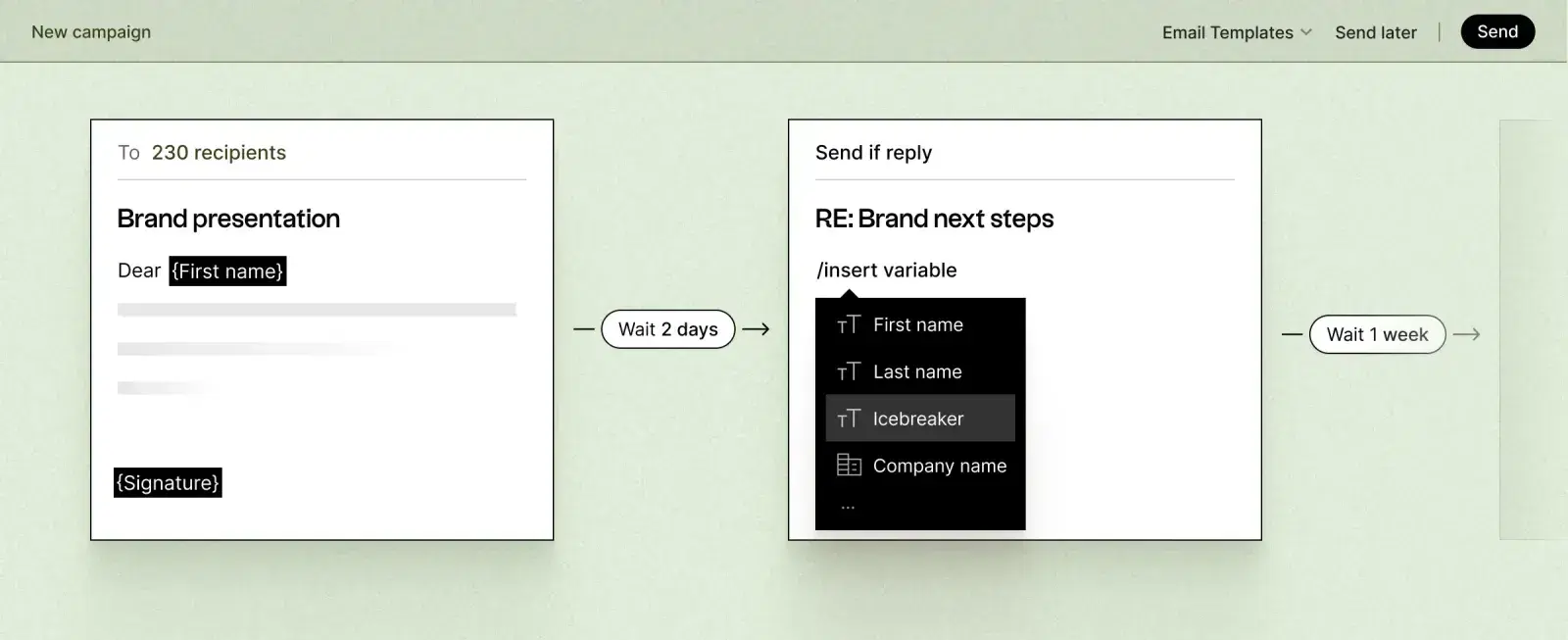
Automated sequences that fire within hours of each action feel mechanical. Build breathing room into your cadence.
A realistic human advisor rhythm:
- Day 1: Connection request with brief, genuine context
- Day 4–5: First message after connection accepted — no pitch, add value
- Day 10–12: Follow-up that references something new
- Day 18–21: Soft ask if engagement signals are present
Spacing that mirrors how a real person would follow up builds credibility through the sequence itself.
3. Match Tone to the Individual
Not every HNW prospect responds to the same communication style. An executive at a large financial firm responds differently than a founder who just sold their company. A professional in their 40s navigating equity compensation has different concerns than someone in their 60s focused on estate planning.
Read the profile. Write to the person, not the archetype.
4. Lead With Value, Not an Ask
The messages that get responses from HNW prospects lead with something genuinely useful: a relevant insight, a specific observation about their situation, a resource that addresses something they're likely thinking about. Not an ask for their time.
This shifts the dynamic from "what can you do for me" to "here's why this conversation would be valuable for you." That's the framing that earns a response.
5. Use Their Engagement as Context
If a prospect liked a post you published about exit planning, your first message can reference that engagement directly. "Noticed you engaged with my post on [topic] — thought you might find this relevant as well." This creates an organic, non-mechanical bridge between their behavior and your outreach.
Building This at Scale With Valora
The challenge is applying all of this across hundreds of prospects simultaneously without reverting to generic templates.
Valora handles this by conducting real-time research on each prospect before generating the outreach. The message for a CFO at a mid-size private company who recently engaged with your content on tax planning looks different from the message for an executive at a pre-IPO company who connected through a mutual advisor contact. Both are automated. Neither reads that way.
The personalization inputs that matter most — recent role change, specific professional context, engagement history, wealth signals — are pulled automatically and incorporated into each message before it sends.
What "Feeling Human" Actually Achieves
When automated LinkedIn outreach is done correctly, the response isn't "I can tell this is automated, but I'll respond anyway." The response is a genuine reply from someone who felt recognized and saw relevance.
That's a different starting point for an advisory conversation. Not a grudging engagement with a system, but the beginning of a relationship that feels like it was initiated by someone who pays attention.
That's what separates LinkedIn automation that builds advisory pipeline from LinkedIn automation that generates unsubscribes.
See how Spaces powers personalized LinkedIn outreach for RIAs at scale.