Email Is Dead, LinkedIn Wins: Why Advisors Are Shifting Their Prospecting Strategy

Bhavya Barot
Email response rates for cold outreach have been declining for years. In 2026, they've reached a point where many advisors are questioning whether email prospecting is worth the effort at all.
Meanwhile, LinkedIn prospecting is generating response rates that email can't match. HNW individuals who ignore cold emails respond to LinkedIn messages. Prospects who delete email sequences engage with LinkedIn voice messages.
The shift isn't subtle. It's a fundamental change in how effective advisors are prospecting.
The Email Problem
Email was the standard prospecting channel for decades. It was scalable, non-intrusive, and provided a written record. For a long time, it worked.
But email has become a victim of its own success. Everyone uses it. Everyone sends cold emails. HNW individuals and senior executives receive dozens of cold emails per week. The signal-to-noise ratio has become so poor that most cold email gets ignored.
Email Response Rates in 2026
Generic cold email: 1–2% response rate
Personalized cold email: 3–5% response rate
Email from known sender: 10–15% response rate
These numbers have declined steadily over the past five years. The decline reflects a simple reality: email inboxes are too crowded, and most cold email gets filtered or ignored.
For a firm sending 100 cold emails per week, a 3% response rate means 3 responses. Of those, maybe 1 converts to a meeting. That's 1 meeting per 100 emails sent.
Why Email Response Rates Declined
Volume. Everyone sends cold email. Inboxes are overwhelmed.
Filtering. Email filters, spam detection, and inbox management tools have become more aggressive. Legitimate cold email gets caught in filters.
Fatigue. HNW individuals have learned to ignore cold email. They've been pitched thousands of times. They're numb to it.
Lack of social proof. An email from an unknown sender has no credibility signal. There's no way for the recipient to verify that you're legitimate or that you understand their situation.
The LinkedIn Advantage
LinkedIn prospecting is generating dramatically higher response rates than email. Why?
LinkedIn Has Built-In Credibility
A LinkedIn profile is a credibility signal. The prospect can see your background, your experience, your network, and your activity. They can verify that you're a real person and that you understand their industry.
An email from an unknown sender has no credibility. A LinkedIn message from someone with a credible profile is fundamentally different.
LinkedIn Feels Less Intrusive
Email is asynchronous and one-way. A cold email feels like an interruption. A LinkedIn message feels like a conversation. The platform is designed for professional networking, so receiving messages from professionals feels natural.
LinkedIn Enables Warm Outreach at Scale
On LinkedIn, you can see mutual connections, engage with someone's content before reaching out, and build familiarity before sending a direct message. This turns cold outreach into warm outreach at scale.
LinkedIn Messages Convert Better
The data is clear:
| Channel | Response Rate | Meeting Rate |
|---|---|---|
| Cold email | 3–5% | 0.5–1% |
| LinkedIn message (cold) | 8–12% | 1.5–3% |
| LinkedIn message (warm) | 25–40% | 10–24% |
| LinkedIn voice message | 12–18% | 3–6% |
LinkedIn's response rates are 2–4x higher than email across the board.
The Strategic Shift
Advisors who were relying on email prospecting are shifting to LinkedIn. The data is too compelling to ignore.
But this shift comes with a caveat: LinkedIn prospecting requires a different approach than email prospecting.
Email Prospecting Approach
- Build a large list of prospects
- Send personalized emails at scale
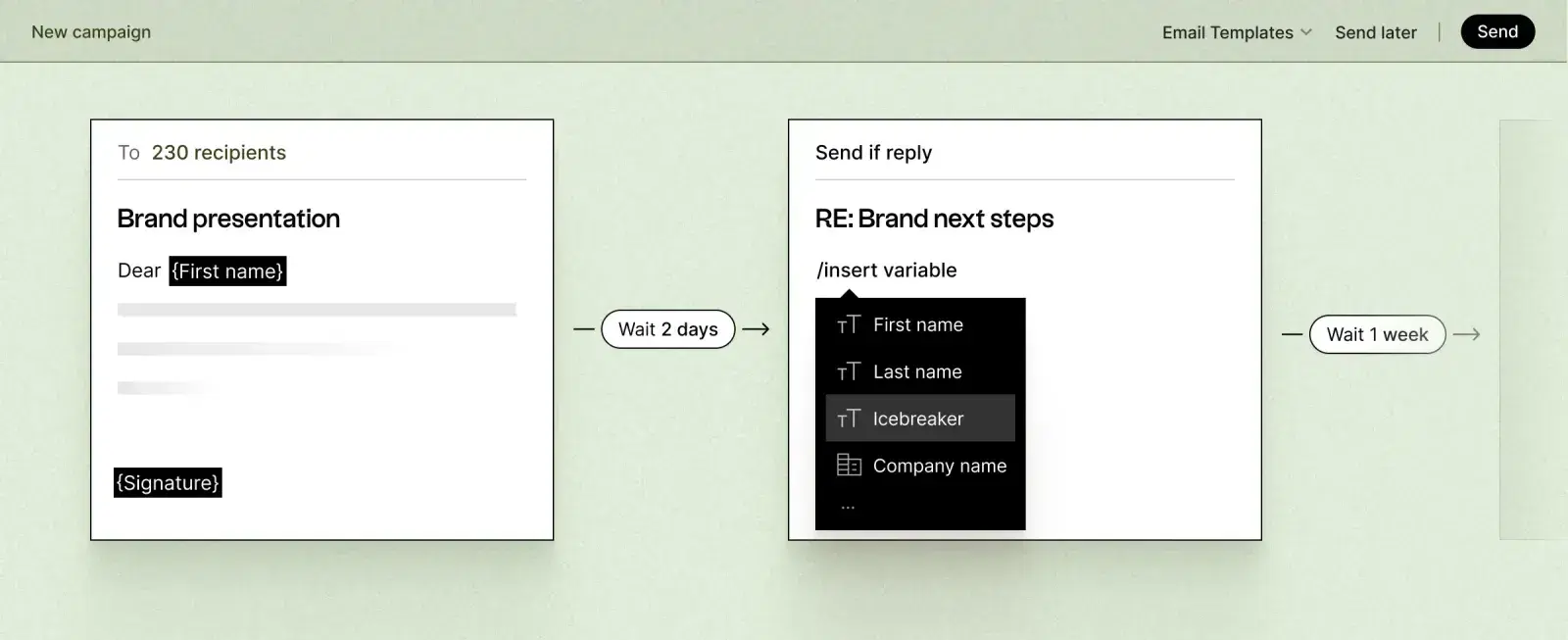
- Manage follow-up sequences via email
- Track responses and conversions
LinkedIn Prospecting Approach
- Build a targeted list of high-fit prospects
- Engage with their content before reaching out
- Send personalized messages that reference prior engagement
- Use multi-channel follow-up (LinkedIn, email, voice)
- Prioritize quality over volume
The shift from email to LinkedIn isn't just a channel change. It's a strategy change from volume-based to quality-based prospecting.
Email Isn't Dead — It's Just Not Primary Anymore
Email still has a role in advisory prospecting. But it's no longer the primary channel.
Where email still works:
- Following up after a LinkedIn conversation has started
- Sending longer-form content or proposals
- Maintaining communication with prospects who prefer email
- Nurturing prospects who have already engaged
Where email doesn't work anymore:
- Cold outreach to unknown prospects
- Initial contact with HNW individuals
- High-volume prospecting campaigns
The advisors who are succeeding in 2026 use LinkedIn as the primary prospecting channel and email as a supporting channel. They initiate contact on LinkedIn, build engagement there, and use email for follow-up and longer-form communication.
The Multi-Channel Reality
The most effective advisory prospecting in 2026 is multi-channel:
- LinkedIn for initial contact and engagement
- LinkedIn voice messages for relationship deepening
- Email for follow-up and longer-form content
- Phone for high-priority prospects at the right moment
This multi-channel approach generates higher conversion rates than any single channel alone because it meets prospects where they are and uses the channel best suited to each stage of the conversation.
What This Means for Your Prospecting Strategy
If you're still relying primarily on email prospecting, it's time to shift. The data is clear: LinkedIn is more effective.
But the shift requires more than just changing channels. It requires changing your approach:
- Quality over volume: Smaller, more targeted prospect lists
- Engagement first: Build familiarity before reaching out
- Multi-channel sequences: Use LinkedIn, voice, email, and phone strategically
- Personalization: Every message should reference something specific about the prospect
- Relationship focus: The goal is building relationships, not just getting meetings
Valora manages this multi-channel approach automatically. She identifies prospects on LinkedIn, engages with their content, sends personalized messages, manages voice message sequences, and coordinates email follow-up — all in a systematic, integrated workflow.
The result is prospecting that leverages LinkedIn's advantages while maintaining the benefits of email and phone as supporting channels.