Lead Scoring Best Practices for Financial Advisors: How to Shorten Your Sales Cycle

Bhavya Barot
Advisor pipelines slow down when the wrong prospects get the most attention.
The culprit is almost always the same: a lead scoring model that was set up once and never revisited, or — worse — no scoring model at all. Advisors rely on gut feel to decide who to call next, while genuinely high-fit prospects sit uncontacted in the CRM.
Spaces was built specifically to solve this. The platform filters signals across 50+ data sources to surface the HNW prospects most likely to convert, so your firm's AUM growth isn't held back by guesswork.
But even with powerful tooling, it helps to understand the principles behind great lead scoring. Here's what separates firms that consistently fill their appointment calendar from those spinning their wheels on low-fit contacts.
What Is Lead Scoring?
Lead scoring is a method advisors and business development teams use to rank prospects by their likelihood of becoming clients. Each prospect receives points based on two categories of signals: who they are (fit) and what they do (intent).
Fit signals include demographic and firmographic attributes like investable assets, net worth bracket, geography, profession, and life stage. Intent signals come from behavior — visiting your advisory firm's website, engaging with outreach, attending a webinar, or responding to a message.
A well-designed scoring model helps advisors identify prospects that match their ideal client profile (ICP) and show early buying activity. With scores in place, advisors can focus energy on the opportunities most likely to convert to AUM.
Lead Scoring Isn't Broken — The Way Most Advisors Use It Is
Lead quality has improved industry-wide as data sources have gotten richer. But better data doesn't help if poor prioritization is what breaks the pipeline.
Why Most Pipelines Feel Busy but Go Nowhere
A crowded CRM creates the illusion of momentum. New contacts appear, outreach goes out, but that doesn't mean the right prospects are getting the right attention in the right order. For most RIAs, lead qualification is the number one bottleneck — not lead volume.
Sales cycles in advisory business development are also getting longer. Prospects do more research independently before engaging. The reason is straightforward: firms generate prospects faster than advisors can follow up meaningfully, which leads to late responses and cold leads.
The Cost of Poor Prioritization
Poor prioritization doesn't just slow deals down — it costs AUM. Advisors spend early-cycle energy on prospects who were never going to move, while high-fit, high-net-worth contacts sit unanswered.
Lead scoring only works when the entire BD team agrees on what "qualified" actually means and what should happen when a prospect crosses a threshold. Without that alignment, scoring becomes a vanity metric rather than an operational tool.
6 Lead Scoring Best Practices That Actually Shorten Pipelines
1. Start With Fit Before You Chase Intent
Intent signals are everywhere: page visits, email opens, webinar registrations. This visibility has led many firms to overweight intent data before confirming whether a prospect actually belongs in the pipeline.
The most reliable scoring models invert this order — ICP alignment comes first.
Define a prospect-grade ICP
Start with the attributes that consistently appear in your best clients — those who came in with significant AUM, referred others, and stayed long-term.
Consider filtering on:
- Net worth / investable assets bracket
- Income tier and liquidity
- Age and life stage (pre-retirement, business exit, inheritance)
- Geography and proximity to your advisors
- Profession and employer (physicians, tech executives, founders, etc.)
- Source of wealth type (W-2 earner, business owner, inherited)
- Engagement channel (referral, LinkedIn, cold outreach, inbound form)
These attributes typically indicate both capacity and willingness to delegate wealth management.
Evaluate intent within the context of ICP fit
Intent signals only become meaningful once ICP fit is confirmed. A pricing page visit from a $5M AUM prospect should immediately elevate their priority. The same visit from someone outside your wealth bracket may simply be curiosity.
Evaluate ICP fit first, then layer in intent. Do it the other way around, and you'll end up spending advisor time on highly engaged but low-fit contacts.
2. Combine Explicit and Implicit Scoring Signals
Structure your scoring model around two signal types: explicit attributes (who the prospect is) and implicit behavioral signals (what they do). Together, these create a single priority score.
Explicit scoring: who the prospect is
Map your ICP criteria to point values based on patterns in your existing client base. Attributes that correlate with fast-to-close, high-AUM clients should carry more weight.
| Attribute | Criteria | Example Score |
|---|---|---|
| Net worth bracket | $5M–$25M | +30 |
| Net worth bracket | $1M–$4.9M | +15 |
| Net worth bracket | Under $1M | +5 |
| Life stage | Pre-retirement (55–65) | +25 |
| Life stage | Active accumulation (40–55) | +15 |
| Profession | Business owner / exec | +20 |
| Geography | Core metro markets | +10 |
| Source | Referral or warm intro | +20 |
| Source | Cold inbound | +5 |
Implicit scoring: what the prospect does
Once fit is confirmed, layer in engagement signals:
| Behavior | Example Score |
|---|---|
| Books a discovery call | +40 |
| Replies to outreach positively | +30 |
| Returns to website 3+ times | +20 |
| Opens 3+ emails in a sequence | +15 |
| Attends a webinar | +10 |
| Clicks a content link once | +5 |
3. Use Negative Scoring to Protect Advisor Time
Negative signals matter as much as positive ones. A prospect who unsubscribes, visits a competitor's site, or fits none of your ICP criteria should lose points — not accumulate them through surface-level engagement.
Apply negative scoring for:
- Investable assets below your minimum threshold (−20)
- Geography outside your served regions (−15)
- Engagement patterns that suggest research only, not intent (−5)
- Long periods of inactivity after initial engagement (decay rules: −10 after 60 days)
Decay rules are especially important. A prospect who opened emails six months ago but has gone dark shouldn't be treated the same as one who engaged last week.
4. Assign Points Based on Revenue Impact
The closer a behavior is to a booking decision, the higher the point value should be. For advisory firms, the behaviors most correlated with converted meetings are direct:
High-value signals (weight heavily):
- Books a call or meeting directly
- Responds to outreach and asks a specific question
- Visits your fee or services page multiple times
- Engages from multiple contact points at the same household or organization
Lower-value signals (weight lightly):
- Opens a single email
- Clicks a blog post link
- Registers for a webinar but doesn't attend
Don't let top-of-funnel content engagement masquerade as buying intent. A prospect who reads your market commentary is not the same as one actively evaluating advisors.
5. Define Clear Thresholds for Action
Clear score thresholds prevent advisor time from being wasted on premature outreach — or on leads who've already crossed the ready-to-book threshold without anyone noticing.
Set three tiers:
- Marketing-qualified prospect (MQP) — 40–69 points: The prospect fits your profile but hasn't shown strong buying intent yet. Enroll in a nurture sequence. Send relevant content, market commentary, or event invitations.
- Sales-ready prospect (SRP) — 70–100 points: Strong ICP fit with clear intent signals. Assign to an advisor for direct outreach within 24 hours.
- High-priority — 100+ points: Immediate action. A rep or Valora should reach out the same day.
These thresholds keep advisors focused on conversations worth having and prevent the pipeline from becoming a to-do list no one works through.
6. Turn Scores Into Queue Rules and Advisor Workflows
A score should determine more than just ranking. It should define how fast a prospect receives attention and what happens next.
Map each score band to a concrete workflow:
- 100+: Immediate task creation. Valora initiates outreach within hours, alerts the assigned advisor.
- 70–99: SDR or Valora sends a personalized sequence same day. Advisor notified.
- 40–69: Enrolled in a nurture campaign. Checked weekly for score changes.
- Below 40: Stays in automated nurture. No direct advisor time spent.
Surface scores inside your daily pipeline view so advisors start each day with a clear, ranked queue rather than a full list with no order.
How to Measure Whether Your Scoring Is Working
A scoring model is only valuable if high-scoring prospects actually convert to booked meetings and new AUM.
Track conversion rates by score range. Prospects in the top tier should convert to discovery calls at significantly higher rates than those in the middle or lower bands. If they don't, your scoring weights need recalibration.
Watch advisor behavior. If your advisors are ignoring score-based queues and working the list manually, the model isn't earning their trust. That's a signal — either the scoring criteria are off, or they aren't visible enough in daily workflows.
Revisit criteria quarterly. Markets change. Client profiles shift. A scoring model built on 2024 closed clients may not reflect the prospects converting in 2026. Pull conversion data by score band every quarter and update weights accordingly.
How Spaces Handles Scoring Automatically
Spaces was built so RIAs don't have to configure lead scoring models manually or maintain them over time.
Valora, Spaces' autonomous AI BDR, continuously monitors signals across 50+ data sources — including firmographic data, behavioral intent, web activity, and social engagement — to surface prospects who match your ICP and show active buying signals.
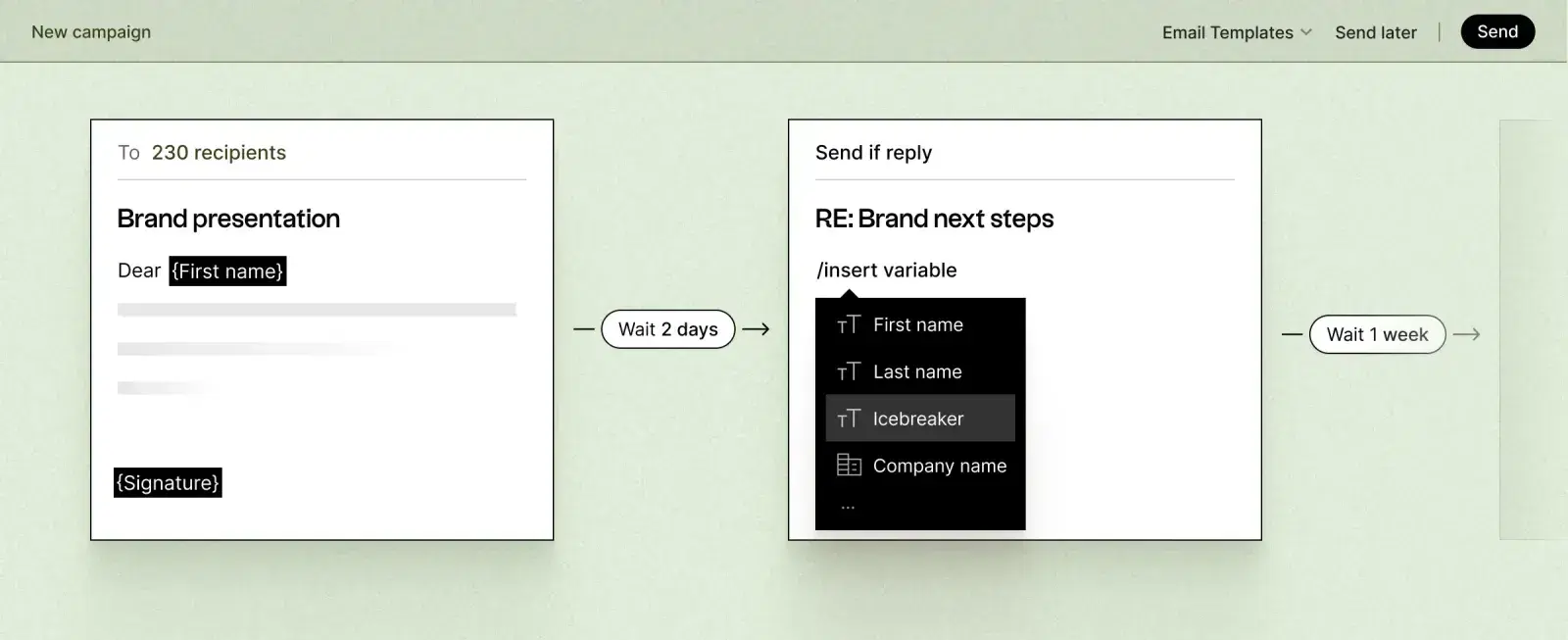
When a prospect crosses your defined threshold, Valora automatically initiates personalized multi-channel outreach across email, calls, SMS, and social. High-intent prospects are contacted while they're actively evaluating — not weeks later when the moment has passed.
Vera, Spaces' autonomous Chief of Staff, handles downstream operations: meeting intelligence, board decks, investor updates, and follow-up coordination. Once a meeting is booked, Vera ensures the advisor walks in prepared and that nothing falls through the cracks.
The result: your firm's business development runs continuously, without manual triage, without scoring spreadsheets, and without advisor time spent on prospects who weren't ready.
Build a Scoring System Your Firm Actually Uses
The scoring models that shorten advisory sales cycles follow a consistent pattern: they start with ICP fit, combine explicit and behavioral signals, and set thresholds that trigger clear action.
With Spaces, that entire process runs autonomously. Valora identifies, scores, and reaches out to qualified HNW prospects. Your advisors focus on closing — not on figuring out who to call next.
Book a demo to see how Spaces handles prospecting and scoring for your firm.