LinkedIn for Financial Advisors: The Complete Prospecting Guide (2026)

Bhavya Barot
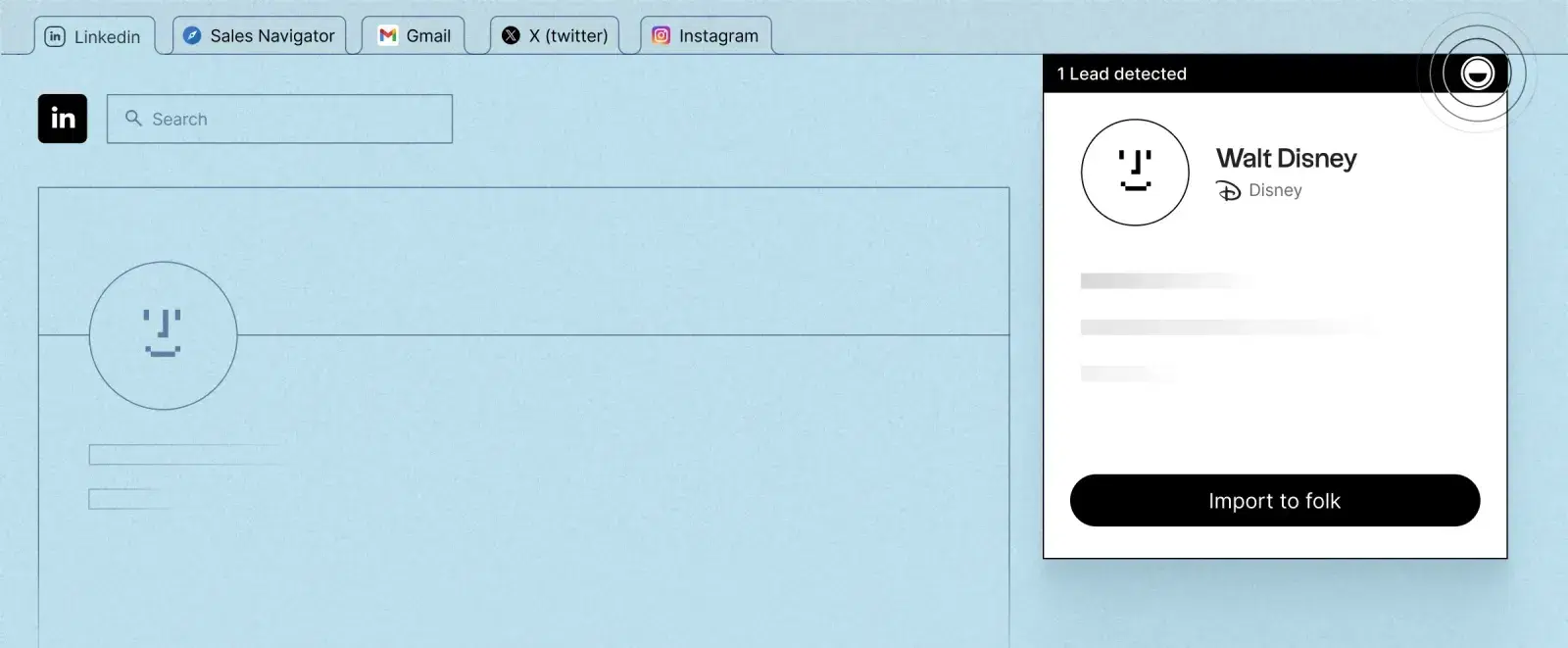
LinkedIn has become the highest-value prospecting channel for financial advisors targeting executives, business owners, and high-net-worth individuals. The reason is simple: your ideal prospects are on LinkedIn every day — reading, posting, and making decisions about who they trust.
But most advisors use LinkedIn in a way that doesn't work. They either post occasional company content, send generic connection requests, or — worst of all — pitch their services in the first message they send to a new connection.
This guide covers how to actually use LinkedIn as a prospecting system: building the right profile, creating content that earns trust, and running outreach that opens conversations rather than closing doors.
Why LinkedIn works for advisor prospecting
A few numbers worth knowing:
- More than 65 million decision-makers use LinkedIn — including the executives, business owners, and senior professionals that make up most advisors' ideal client profiles.
- InMail and direct messages have response rates 3x higher than cold email for first contacts, because there's inherent social context.
- LinkedIn content compounds over time — a post from 3 months ago can still surface to someone new today and create a warm inbound contact.
- Multi-channel outreach that combines LinkedIn and email generates 3.5x more responses than either channel alone.
The key is using LinkedIn as a *relationship* channel, not a broadcast channel. The advisors who get results treat it as a long-term credibility-building tool — not a place to run ads for their services.
Step 1: Optimise your profile for trust, not clicks
Your LinkedIn profile is your first impression with every prospect who looks you up — whether they found you through outreach, a referral, or a Google search. Before you do anything else, make sure it works.
The profile sections that matter most
Headline. Don't just list your title. Write a headline that tells your ideal client what you do for them. "Wealth strategist for executives navigating liquidity events" is far more compelling than "Financial Advisor at [Firm Name]."
About section. This is where you tell your story in first person. Write like you talk. Be specific about who you work with, what problems you solve, and what makes your approach different. Avoid jargon and generic claims like "holistic financial planning."
Featured section. Pin your best content here — an article that demonstrates expertise, a client case study (anonymised), or a link to your firm's site. This section gets skipped by most advisors and noticed by smart prospects.
Experience. Write descriptions for each role that emphasise what you did, not just your title. Use specific language about client outcomes where you can.
Recommendations. Three or four strong client or colleague recommendations are worth more than a fully polished profile with none. Ask your best clients to write them — most are happy to if you ask directly.
Profile photo and banner
Use a professional headshot — not a logo, not a casual photo, not an avatar. Your banner image is prime real estate. Use it to reinforce your positioning: a clean image with a short phrase that speaks to your ideal client.
Step 2: Build the right network
Growing your LinkedIn network indiscriminately doesn't help you. A smaller, well-targeted network of people who match your ideal client profile is worth far more than thousands of unrelated connections.
How to grow a targeted network
Connect with your existing clients. They'll see your content, engage with it, and — if you're consistent — remind their network that you exist.
Connect with prospects who match your ICP. Search by title, industry, company size, and geography. Send personalised connection requests — even a single sentence that references something genuine goes a long way.
Connect with COIs and referral partners. CPAs, estate attorneys, business bankers. These connections become a referral network if you show up consistently.
Engage before connecting. If someone in your target audience posts content, engage with it genuinely before sending a connection request. By the time you connect, they recognise you.
Connection request message
Don't send blank connection requests to prospects you don't know. A short, personalised note increases acceptance rates significantly.
Hi {{firstname}},
I came across your profile while connecting with [professionals in your field / executives at companies like yours] — your background in [their field] stood out.
I work with [specific client type] on [brief value prop]. Would love to connect.
[Your name]
Keep it short. No pitch. The goal is connection, not a sale.
Step 3: Create content that builds credibility
Content is the engine that makes everything else on LinkedIn work better. When prospects see your posts regularly, you move from "someone who messaged me" to "that advisor who clearly knows what they're talking about."
You don't need to post every day. You need to post consistently and usefully.
What to post
Your perspective on relevant news. When there's a market event, tax law change, or economic development that affects your clients — write a short, clear take on what it means for people in their situation. Be specific and avoid generic commentary.
Decision-relevant insights. Posts that help your ideal client think through a decision they're likely facing get shared and saved. "3 things executives should do before exercising ISOs" is more useful than "Proud to announce our Q1 results."
Stories from your practice. Anonymised client situations that illustrate a planning concept are among the highest-engagement content types for advisors. People recognise themselves in them.
Honest takes. The advisors who build the largest LinkedIn followings tend to be the ones willing to have a clear point of view — on planning mistakes, on industry practices, on things they'd do differently. Authenticity compounds.
Posting cadence
1–2 posts per week is enough to stay visible and build credibility over time. Consistency matters more than frequency. One genuine post every three days beats seven forgettable ones in a week.
Format
Short-form posts with line breaks (not long paragraphs) perform best. Lead with your most important point — don't bury it. Use a hook that earns the "see more" click in the first two lines.
Step 4: Run direct outreach that opens conversations
Once your profile is strong and you've been posting for a few weeks, direct outreach becomes significantly more effective — because prospects can look you up and see that you're credible before they decide whether to respond.
The outreach approach that works
Don't pitch in the first message. The number one mistake advisors make on LinkedIn is leading with their services. It immediately signals that the conversation is one-directional.
Reference something specific. A recent post they wrote, a role change, a company milestone, a mutual connection. Generic messages get ignored. Specific ones get responses.
Ask a question, not for a meeting. Your first message should start a conversation, not request 30 minutes. Once they respond, you can move toward a call.
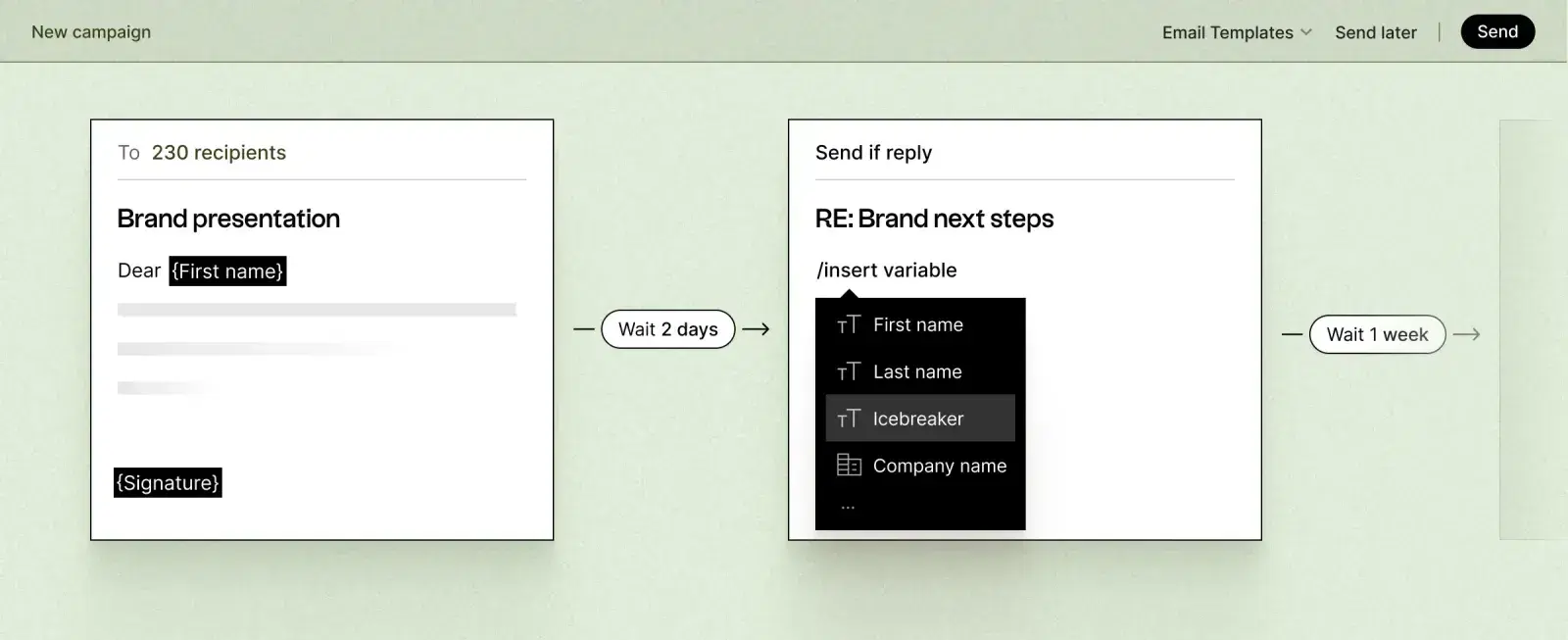
Sequence across channels. LinkedIn outreach works best when it's part of a coordinated sequence — a LinkedIn connection followed by a message, followed by an email if there's no response, followed by a LinkedIn follow-up. Multi-channel outreach consistently outperforms any single channel.
Message templates
First message after connecting:
Hi {{firstname}},
Thanks for connecting. Your post on [topic] last week resonated — particularly the point about [specific detail].
I've been working with [professionals like them] on similar challenges. Not pitching anything — just curious if the [topic] is something you're actively navigating right now?
[Your name]
If they engage with your content:
Hi {{firstname}},
Noticed you engaged with my post on [topic] — glad it was useful.
I work specifically with [your ICP] on that exact area. Would love to swap perspectives if you ever have 15 minutes.
[Your name]
If they've changed roles recently:
Hi {{firstname}},
Congratulations on the [new role] at [company] — a big move.
Career transitions like this often come with a set of financial decisions that don't get enough attention early enough. I work with executives navigating exactly that.
Worth a quick conversation?
[Your name]
Step 5: Combine LinkedIn with email for maximum reach
LinkedIn alone gets you far. LinkedIn combined with email gets you significantly further.
A coordinated sequence looks like this:
- Day 1: LinkedIn connection request with a short personalised note
- Day 3–4: LinkedIn message if connected, or follow-up if no response
- Day 7: Email if you have it, referencing the LinkedIn interaction
- Day 12: LinkedIn follow-up with a new angle or piece of value
- Day 16: Final email with a soft close
This multi-touch approach respects the prospect's pace while staying visible. Most responses come on the 3rd or 4th touch — which means stopping after the first message (as most people do) leaves the majority of potential conversations on the table.
Running this manually across dozens of prospects is time-consuming. Most advisors who run systematic outreach either use a tool to manage the sequences or work with a managed service that handles it end-to-end.
Spaces runs this entire process for financial advisors — building the prospect list, writing personalised messages, coordinating LinkedIn and email sequences, and booking meetings directly into your calendar.
Common mistakes advisors make on LinkedIn
Pitching too early. The most common reason outreach doesn't work. Build trust first.
Posting only about their firm. Nobody logs onto LinkedIn to read your fund performance or your firm's latest hire. Post what's useful to your ideal client.
Ignoring messages. If someone responds to your outreach or content, respond quickly. Slow replies kill momentum.
Not following up. Most advisors send one message, don't hear back, and move on. In reality, 80% of responses come from follow-ups. One touch is not a system.
Connecting with everyone. A large, unfocused network dilutes your content reach and makes targeting harder. Be selective about who you connect with.
What good results look like
For advisors running a systematic LinkedIn outreach programme:
- Connection acceptance rates: 30–50% with a personalised request
- First message response rates: 8–15% for well-targeted, personalised outreach
- Meeting conversion from responses: 30–50% of positive responses convert to a call
These numbers don't happen immediately. It takes 4–6 weeks to build the profile, create enough content to establish credibility, and refine your messaging based on what gets responses. But the compounding effect — where your content makes your outreach warmer, and your outreach grows your audience — becomes significant over time.
Getting started: your first 30 days
Week 1: Optimise your profile (headline, about section, featured). Connect with 20–30 people who match your ICP.
Week 2: Start posting — one insight post, one perspective post. Begin engaging with prospects' content before reaching out.
Week 3: Start direct outreach. 5–10 personalised messages per day. Track responses.
Week 4: Refine your messaging based on what's working. Add email to the mix for non-responders.
Repeat. The system compounds over time.
If you want to skip the setup and go straight to meetings, Spaces handles the entire outreach programme — from prospect identification to confirmed conversations in your calendar.