HNW Prospecting for Independent RIAs in San Francisco and the Bay Area

Bhavya Barot

The San Francisco Bay Area is the wealthiest region per capita in the United States and home to one of the highest concentrations of ultra-high-net-worth individuals anywhere in the world. The decades-long compounding of technology wealth — through IPOs, acquisitions, venture returns, and the public market appreciation of tech giants — has produced a HNW population characterised by financial sophistication, a deep preference for the fee-only fiduciary model, and planning needs that are among the most complex in the country.
At the same time, the Bay Area independent RIA market is the most developed and competitive in the country. Firms like Wetherby Asset Management, Waldron Private Wealth, Brighton Jones, and hundreds of other sophisticated independents have been building practices in this market for decades. The opportunity for multi-billion dollar independent RIAs, that concentration is both an extraordinary opportunity and a brutal competitive reality. The Bay Area rewards expertise more than almost any other market. Its HNW population is financially literate, analytically rigorous, and deeply sceptical of generic advisory pitches. They do not respond to performance claims or brand names — they respond to advisors who demonstrate specific, relevant knowledge of their particular wealth situation before asking for a meeting.
The Bay Area HNW Wealth Landscape
The Bay Area's HNW wealth is dominated by technology but extends into venture capital, biotech, real estate, and the dense ecosystem of professional services that has grown alongside the tech economy.
Technology Equity and Post-Liquidity Wealth
The Bay Area has produced more individual wealth through technology equity than any region in history. Employees of Apple, Google, Meta, Salesforce, Oracle, and dozens of other established tech giants have accumulated significant equity through decades of RSU vesting and stock appreciation. The typical senior software engineer or product manager at a major Bay Area tech company has accumulated equity wealth that, in many cases, substantially exceeds what their salary alone would suggest.
The planning challenge for long-tenured tech employees is concentration and timing. A 12-year Google employee with $4M in unvested RSUs and $2M in already-vested shares sitting in a personal brokerage account may have 60% to 70% of their net worth in a single stock. The decision of when and how to diversify — managing capital gains tax exposure, coordinating sales across tax-loss harvesting opportunities, and building a genuinely diversified portfolio without triggering a disproportionate single-year tax bill — is a planning problem that requires specific expertise and that most advisors handle generically.
Startup equity creates a different but equally complex planning situation. Founders and early employees of venture-backed companies that have not yet gone public are sitting on illiquid positions whose value is highly uncertain. Pre-IPO planning — early exercise of ISOs to start the clock on long-term capital gains holding periods, 83(b) elections, AMT planning for ISO exercises, and the specific planning decisions that need to happen before a liquidity event — is a niche that rewards deep expertise and creates clients before the wealth is even realised.
Post-IPO wealth management — managing a concentrated position in a newly public company through lockup expiration and beyond — is another specific planning niche where the right advisor creates enormous value. The difference between an advisor who manages a $10M Airbnb position with generic diversification advice and one who builds a coordinated plan across protective puts, systematic selling, charitable giving with appreciated shares, and a tax-loss harvesting strategy across the rest of the portfolio can easily be worth seven figures in after-tax wealth creation.
Venture Capital Ecosystem Wealth
The Bay Area venture capital ecosystem — Sand Hill Road and its distributed modern descendants — is one of the densest concentrations of investment wealth on the planet. VC principals with carried interest, management company equity, and personal investments across dozens of portfolio companies represent a complex and highly compensated population with planning needs that go far beyond what standard wealth management provides.
The GP carry planning challenge is specific and recurring: when carry is recognised, how to manage the tax impact; how to coordinate distributions from multiple fund vintages; how to think about reinvestment versus diversification; and how to build a personal financial plan that accounts for highly variable, lumpy income alongside the illiquid portfolio positions that represent most of the GP's net worth. The advisors who understand this world earn relationships with VC principals that last across fund vintages and generations.
LP investors in Bay Area VC funds — family offices, successful entrepreneurs who have reinvested liquidity event proceeds, and high-earning professionals who have built meaningful portfolio exposure over time — represent another significant HNW segment with complex multi-asset planning needs.
Biotech and Life Sciences Executive Wealth
The Bay Area is the global headquarters of the biotech industry. Genentech (now part of Roche), Gilead Sciences, BioMarin Pharmaceutical, Guardant Health, and hundreds of smaller biotech companies — in South San Francisco, the East Bay, and the broader Bay Area — employ executives and scientists whose compensation is heavily equity-weighted and whose planning situation is shaped by the binary, event-driven nature of biotech valuations.
Biotech executive wealth has a distinctive profile: large equity grants, significant upside if the pipeline delivers, potential dilution or loss if it does not, and frequent M&A transactions that produce sudden, concentrated liquidity. The biotech executive who has been accumulating options and RSUs for 10 years and whose company announces an acquisition has 60 to 90 days to make planning decisions that will determine the after-tax outcome of their career's equity accumulation. The advisor who is already in that relationship — who has been planning for this scenario — is indispensable. The advisor who calls after the announcement is too late.
Real Estate and Legacy Wealth
The Bay Area's extraordinary real estate appreciation has created significant wealth for long-term property owners — not just investors, but ordinary homeowners who bought in Palo Alto in 1985 or in the Richmond District in 1990 and are now sitting on homes worth $3M to $8M with cost bases in the low six figures. These individuals have planning needs around estate planning, Proposition 19 implications, and the question of how to eventually access the equity in their home without triggering a catastrophic tax event.
Multi-generational San Francisco family wealth — accumulated across real estate, professional practices, and investments over decades — creates estate planning complexity around AB trusts, GRATs, IDGTs, and the specific challenges of transferring appreciated Bay Area real property across generations.
The Prospecting Challenge Specific to the Bay Area
The Bay Area is the most sophisticated advisory market in the country, which creates a specific prospecting challenge. Prospects here have encountered every advisory pitch. They have been recruited by every major private bank and wirehouse. They have colleagues who are independent RIAs. They are analytically rigorous evaluators who will see through generic outreach immediately.
The advisors who succeed in Bay Area prospecting are the ones who demonstrate specific expertise in the first message. A pre-IPO planning question directed at a founder whose company has just filed an S-1 — specific to their company's equity structure and the decisions they need to make in the next 30 days — generates a response. A generic "I work with tech executives and would love to connect" does not.
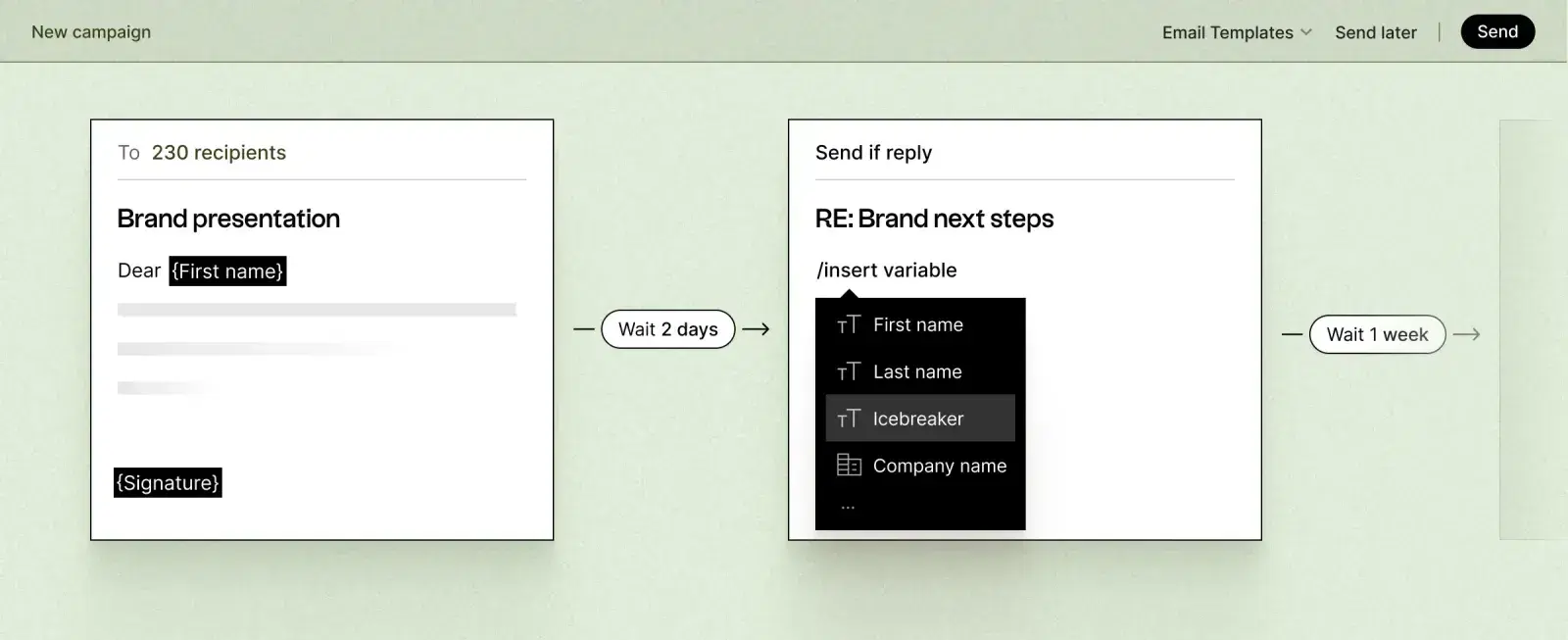
Spaces designs outreach for this reality. Every message is built around the specific planning situation of the target prospect, demonstrating knowledge before asking for time.
The Competitive Landscape for Independent RIAs in the Bay Area
The Bay Area independent advisory market is the most developed in the country, which means differentiation requires genuine specialisation. The firms that compete successfully in this market are not generalists — they are specialists in pre-IPO planning, VC carry management, concentrated equity management, or biotech executive compensation. The generalists compete on brand, fees, and reputation in ways that do not favour smaller independent firms.
The opportunity for well-positioned independent RIAs in the $100M to $400M range is to own specific niches — to be the go-to firm for pre-IPO founders at Series B and C companies, or for VC associates approaching their first carry distribution, or for biotech executives navigating an acquisition — rather than to compete broadly with established generalist firms.
How Spaces Works for Bay Area RIAs
Spaces is a fully managed HNW meeting booking service for independent RIAs. Spaces identifies high-net-worth prospects who match your firm's target profile in the San Francisco Bay Area, runs personalised outbound outreach on your behalf, manages all responses, and books confirmed meetings directly into your calendar.
Every prospect who reaches your calendar has confirmed $500,000 or more in investable assets and expressed genuine openness to a wealth management conversation.
Frequently Asked Questions
Does Spaces work specifically in the Bay Area market?
Yes. Spaces serves San Francisco, the Peninsula (Palo Alto, Menlo Park, Atherton, Woodside), the South Bay (San Jose, Cupertino, Mountain View, Sunnyvale), the East Bay (Oakland, Berkeley, Walnut Creek), and Marin County.
What types of HNW prospects can Spaces target in the Bay Area?
Common target profiles include long-tenured tech employees with concentrated equity, pre-IPO founders and early employees, VC principals with carry and fund interests, biotech executives, and long-term real estate owners with estate planning needs.
How long before the first meeting is booked?
Spaces typically launches within two to three weeks and delivers first qualified meetings within 30 to 45 days.
Is there a setup fee?
Reach out to discuss pricing and availability in the San Francisco market.
Related Reading
- The Independent RIA's Guide to Liquidity Events: How to Turn Founder Wealth into New AUM
- Spaces vs Snappy Kraken: Which Is Better for Independent RIAs in 2026?
- HNW Prospecting for Independent RIAs in Los Angeles
- HNW Prospecting for Independent RIAs in Seattle
- Inbound vs Outbound for RIAs: Which Grows AUM Faster in 2026?