An AI agent for apparel manufacturing messages
Apparel manufacturers sit between two kinds of correspondents. Some make clothes for other brands, as knitting mills and cut-and-sew contractors, and they hear from designers, brand owners and buyers about samples, minimums and production slots.
Others sell their own labels, uniforms, workwear or accessories, and they hear from shoppers and organisations about sizes, fit and delivery.
Spaces connects the messaging accounts both groups already use, so an AI agent can read what arrives and reply in the same chat, using information you give it.
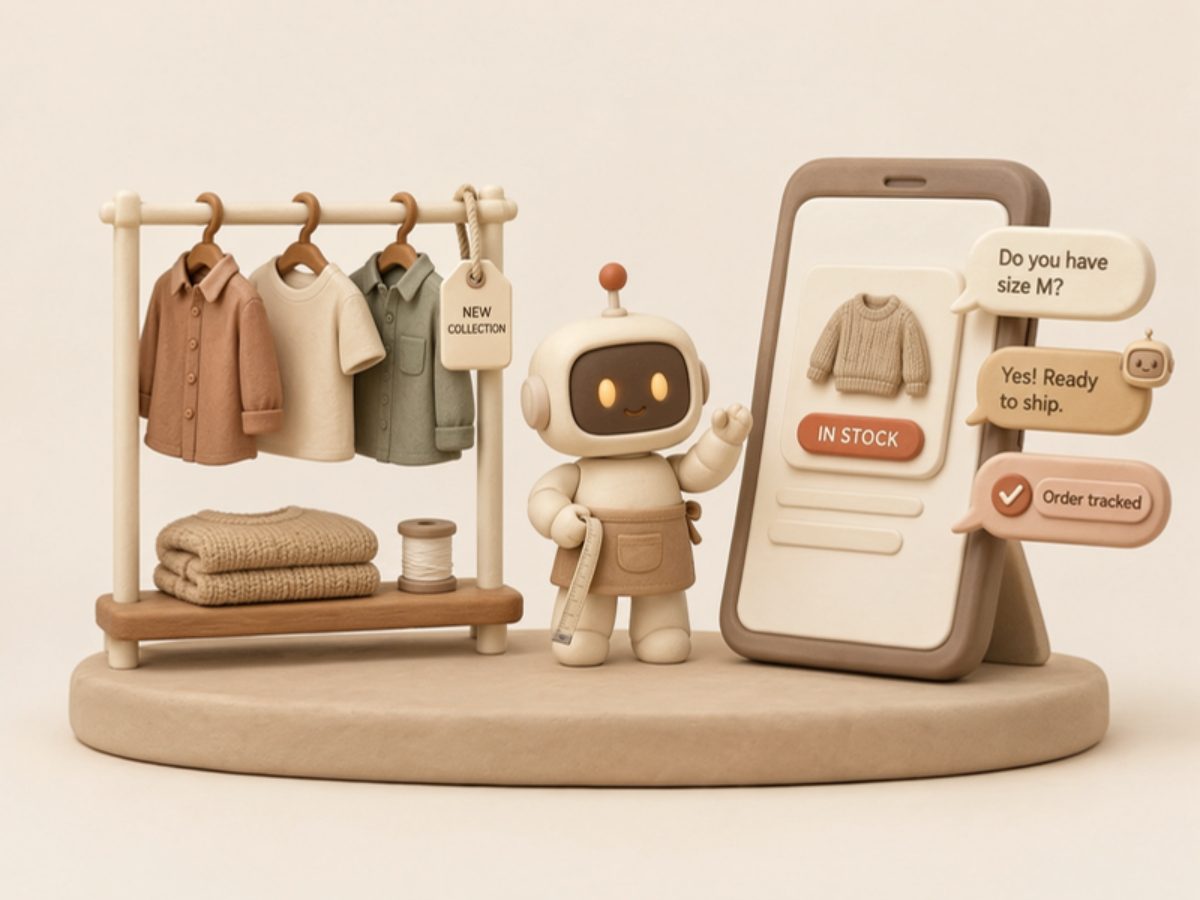
- Contract manufacturers hear from brands and designers about samples, minimums and slots; makers of their own labels hear from shoppers about sizes, fit and delivery.
- An agent can answer routine questions about size charts, materials as you describe them, care, lead times, minimum runs and how to start a sample.
- Pricing, production dates, fit approvals, quality disputes and private-label or confidentiality matters go to a person.
- Spaces only carries the messages, so order records, patterns and production plans stay in your own systems.
- Spaces is for people who message you or already know you, not for bulk offers or bought buyer lists.
Spaces handles the messages only. Your agent reaches your size charts, order records or production schedule through its own tools, and it can hand any conversation to a person.
The agent is a front desk for repeat questions; fit decisions, pricing, production commitments and disputes belong to people.
- Subsector
- NAICS 315
- Part of
- Manufacturing
- Inside it
- 3 industry groups
- Last updated
Here is one conversation, start to finish.
An example of how an AI agent handles a message in apparel manufacturing. The names and details are made up.
Who writes to an apparel maker
Apparel knitting mills produce sweaters, socks, hosiery and other knit garments, and hear from brands about yarn, gauge and sampling. Cut-and-sew contractors and manufacturers hear from designers and labels about patterns, grading, sample runs and production capacity.
Accessory and other apparel makers, covering hats, gloves, belts, scarves, ties and uniforms, hear from retailers, schools, teams, employers and individuals.
Two very different conversations share an inbox. A start-up label asks whether you accept small runs and how a first sample works.
A shopper who buys from your own brand asks whether a jacket runs small, when it will ship, or whether an item can be exchanged. A uniform supplier hears from an organisation about sizes for fifty staff and when they can be delivered.
Fashion is seasonal, so message traffic follows the calendar: development and sampling ahead of collections, production slots and delivery chasers as they approach, and returns and size questions once garments reach customers.
Knowing which stage a message belongs to is half the work of answering it.
Questions an agent can answer
For brands and designers: what garments you make, minimum quantities per style and colour, how to start a sample, what a tech pack needs to contain, typical sampling and production lead times as you state them, where you ship, and who to talk to about capacity.
The agent can collect the garment type, quantity, timeline and existing materials, and pass a full brief to a person.
For shoppers and organisations: size charts, how to measure, fabric and care information, delivery times, exchange and return process as written, and where an order stands if a tool lets the agent look it up.
The agent can also help an organisation work out what information you need for a bulk uniform order and hand the details to a sales contact.
- Knitting mills: yarn and gauge options you offer, sampling steps, minimums, finishing capabilities.
- Cut and sew: pattern and grading requirements, sample turnaround, minimum runs, trims and labels.
- Accessories and other apparel: sizing, personalisation options, team or school orders, bulk quantities.
- Own-label sellers: fit, measurements, care, delivery, exchanges and stock.
What the business must give its agent
Write a capability sheet for trade enquiries and a customer sheet for shoppers. The first lists what you make, minimums, the sampling process, what you need from a new client and who handles what.
The second holds size charts, measuring tips, care guides, delivery and exchange policies exactly as you apply them.
Then set limits. The agent must not tell a customer what size to buy beyond your chart, must not promise a production slot or delivery date, and must not state fibre content, origin, ethical or sustainability claims unless you supplied exact wording.
It must not discuss a client's designs with anyone else.
Name the humans: a sales or account manager for brands, a production planner, customer service for shoppers, and a quality contact. Tell the agent to hand over with a summary so nobody asks the sender to repeat.
What always goes to a person
Anything about price, production capacity or a delivery date commitment goes to a person. So does every fit or quality judgment: whether a sample passes, whether a defect is acceptable, whether a return is justified.
Quality disputes between a brand and a factory can be expensive and are not for an agent.
Confidentiality matters. Brands share designs, tech packs and unreleased collections. If someone asks about another client's work, or asks you to copy a design, a person must handle the conversation. Claims about ethical production, factory conditions, certifications and origin are also handled by people.
Consumer-facing makers should hand over any message about a safety concern, an allergic reaction to a material, a garment that caused harm, or a legal or consumer-rights claim. Distressed or angry customers should be heard by a person too.
A week in the life of a small factory or label
On Monday, a designer writes with a sketch and asks whether you can make fifty pieces. The agent asks about fabric, timeline and whether patterns exist, explains the sampling step, and hands a complete brief to your account manager.
A buyer asks where the bulk order is; the agent replies with whatever your tool or planner supplies, or says that a person will check.
Midweek, a shopper asks whether a coat runs large. The agent shares the measurement chart and the garment's fit notes you supplied, and suggests comparing with a favourite coat. Another shopper wants to exchange for a different size, and the agent explains the process.
A school asks for a hundred polo shirts with a logo; the agent collects sizes, quantity, deadline and artwork, then hands over.
At season end, delivery chasers and defect reports arrive together. The agent keeps early replies calm and organised, but the conversations about faulty seams and late shipments are handled by people who can fix them.
Setting it up step by step
Connect the account that brands or customers already message. Begin with a read-only key and watch a week of conversations. Sort them into trade enquiries, sample questions, order status, sizing, returns and complaints.
That sort will show you whether the greater need is on the trade side or the shopper side.
Write the sheets and the handover list. Let the agent draft replies for review, then allow routine ones to go out directly. Spaces paces sends per account, enforces limits and warm-up, and makes every send safe to retry.
Add order lookup later, once the basics hold.
Common mistakes
A common mistake is letting the agent estimate delivery dates, which quickly turn into promises. Another is treating a trade enquiry like a shopper question and replying with a retail return policy.
A third is failing to separate confidential client conversations from general ones, so the agent mentions work it should not.
Avoid using Spaces to mass-message potential brand clients from a bought list. It is for conversations people start with you and for people who know you and expect to hear from you.
Its Terms rule out bulk unsolicited messages, cold outreach and bought or scraped lists.
How to tell it is working
Check first-reply speed, especially across time zones when overseas buyers write while you are asleep. See whether account managers now receive complete briefs.
Read a sample of conversations each week to see if the agent stayed inside your supplied facts, and whether handovers arrive with enough detail.
Look at the kinds of conversations that are handed over. Fit disputes, quality problems, price and capacity should be there. If they are not, the agent may be answering too much.
Where Spaces is not the right tool
It is not a pattern tool, a size recommender or a production tracking system. If you make for a few large brands who work through formal supplier portals, little will arrive by chat. And it will not find new clients for you.
Where it does help is the daily friction: repeated sizing questions, sample enquiries that arrive incomplete, and chasers that interrupt production planning.
What does an agent actually see?
Examples of first messages to businesses in apparel manufacturing. They are illustrations, not real conversations.
- Maya R.Hi, we are a new label and would like to make 50 knitted sweaters. Do you take small runs?
- Tom B.What does a sample cost you to make and how long does it take? We have a tech pack ready.
- Priya S.Do you have capacity for a 500 piece order in time for our autumn launch?
- Daniel K.Does the wool coat run large? I am usually between a medium and a large.
- Amara O.Can I exchange the jacket for a smaller size, and who pays for postage?
- Maya R.Our school needs 100 polo shirts with the crest embroidered by the end of next month.
- Tom B.Where is the bulk order for style 214? The shop is waiting for it.
- Priya S.The stitching on the sleeve of the shirt I received is coming undone. Photo attached.
What always goes to a person.
Your agent answers what it can and hands the rest to someone on your team. These are the conversations to hand over every time.
Prices, quotes, capacity and any delivery date or change to one.
Sample approvals, fit decisions, defect judgments and quality disputes.
Anything about another client's designs, copying a design or confidentiality.
Claims about origin, ethical production, certifications or factory conditions.
Safety concerns, allergic reactions to a material, and any harm from a garment.
Refund disputes, consumer-rights claims and any mention of a lawyer or regulator.
Explore the industry groups.
Thirty free tools for clothing makers and cut-and-sew factories.
Checklists, ready-to-send messages, scorecards and calculators. They run in your browser and send nothing anywhere.
- First-reply checklist for clothing makers and cut-and-sew factories
- Hand-over rules checklist for clothing makers and cut-and-sew factories
- First-week checklist for clothing makers and cut-and-sew factories
- Weekly chat review checklist for clothing makers and cut-and-sew factories
- Busy-season checklist for clothing makers and cut-and-sew factories
- Customer privacy checklist for clothing makers and cut-and-sew factories
- Do and don't guide for your agent: clothing makers and cut-and-sew factories
- Greeting messages for clothing makers and cut-and-sew factories
- All 30 tools
Questions, answered.
01Does this suit a contract manufacturer or a brand?
Both. A contract manufacturer uses the agent to receive and organise new briefs, sample questions and order chasers. A brand uses it for shopper questions about size, delivery and exchanges. Each needs its own fact sheet.
02Can the agent advise on size?
It can repeat your size chart, measuring tips and the fit notes you provide. It should not guess beyond them. If someone is unsure, it can suggest measuring a garment they like and comparing it with your chart.
03Can it give a production lead time?
Only a general range you have written, with the note that a person will confirm for a specific order. It should not promise dates. Production planning belongs to a person.
04How does it treat a start-up brand with a small order?
Politely, and with a clear explanation of your minimums and sampling steps. It collects the details of the garment, quantity and timing, then hands the brief to your account manager.
05Can it handle school or team uniform orders?
It can collect sizes, quantities, deadlines and artwork, explain how you handle personalisation, and pass a full brief to sales. Quotes and deadlines are confirmed by a person.
06Does it keep client designs private?
It only knows what you tell it, and you should instruct it never to discuss one client's work with another. Confidential or sensitive topics should go to a person.
07Can we message shoppers about a new drop?
Only people who know you and have said they want to hear from you, and as a conversation. Spaces' Terms rule out bulk unsolicited messages and bought or scraped lists, and anyone who asks you to stop must be left alone.
08Will it reply without review?
That depends on how you set it up. Many teams begin with drafts for review, then let routine answers about sizes and delivery go out directly, with quality, price and confidentiality kept on handover.
Closer guides for specific businesses.
Clothing brands
Let an AI agent answer sizing, fit, restock and returns questions customers send your clothing brand, in the chat they started. Customer-started conversations only.

Supermarkets
Let an AI agent answer the messages shoppers send your store about stock, hours and order pickup. Customer-started conversations only.

Restaurants
Let an AI agent answer guests' messages about bookings, menus, hours and takeaway, in the chat they started.

Retail stores
Let an AI agent answer customers' messages about sizes, stock, store hours and reserve-and-collect, in the chat they started.

Online stores
Let an AI agent answer order, delivery, return and sizing questions from your customers in the chat they started.

Salons
Let an AI agent answer clients' booking, rescheduling and price questions in the chat they started, while you're with a client.