Answer pickup and delivery messages while your drivers are on the road
Shippers and receivers write to a courier with a waybill number, an address and a clock: where is it, can you pick up by three, why was my delivery missed.
Spaces connects the messaging account those customers already use, so an AI agent can read each message and reply in the same chat, using the service information you give it.
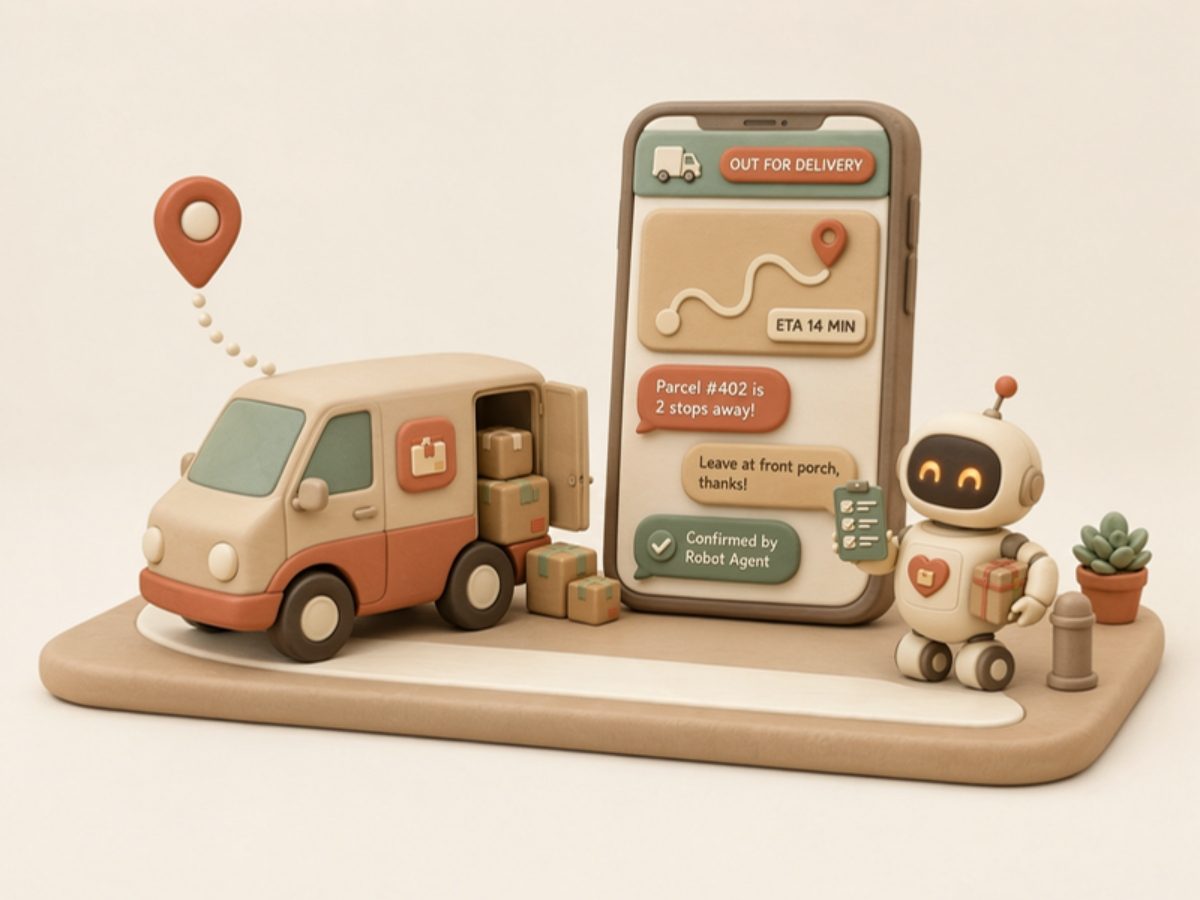
- Courier messages are time sensitive and usually include a waybill number or a pickup address.
- An agent can give status, explain service levels, confirm pickup cutoffs and collect booking details.
- Lost parcels, damage claims, customs holds, dangerous goods and account disputes should go to a person.
- The agent needs your service tiers, cutoffs, restricted items list and depot hours written down.
- Spaces is for customers who write in and recipients who expect to hear from you, never for cold outreach.
This page is for express and regional courier companies, parcel carriers and last-mile fleets that move packages between cities and countries. Spaces handles the messages only.
Your agent checks routes, scans and rate tables through its own tools, and a person handles lost items, damage and customs problems.
- Industry group
- NAICS 4921
- Part of
- Transportation and Warehousing / Couriers and Messengers
- Last updated
Here is one conversation, start to finish.
An example of how an AI agent handles a message in couriers and express delivery services. The names and details are made up.
Three kinds of people, three kinds of urgency
The shipper wants a pickup booked or a price for a document envelope going overseas. The receiver wants to know when the box will arrive and whether someone must be home.
The account holder, often a small online shop, wants to know why six parcels are stuck at the same hub.
Each message carries a deadline, and the answer is often already in your system. The delay is getting a human to read the message, find the waybill and type a reply.
What the agent answers on the spot
Give it a lookup for scans and it can say where a parcel is, what the last event means and what usually happens next.
Give it your service table and it can explain the difference between same-day, next-day and economy, and which one a pickup booked now can still make.
It can also take booking details for your dispatcher: pickup address, contact name, parcel count and weight, and a ready time. The dispatcher confirms the slot, or the agent does if your tools allow.
- Status and last-scan meaning from your tracking
- Pickup cutoffs by area and service level
- Packaging and label rules you require
- Items you cannot carry and why
What to put in the instructions
Write your cutoffs by zone, your declared-value limits and how redelivery works. State what a failed delivery attempt means and how many attempts you make. Add the labelling rules that most often go wrong.
Add your tone, too. Couriers get stressed messages. A short opening that says what you found, then what happens next, calms most of them before a person is involved.
Where a person takes the thread
A parcel that has not moved in a week is a case, not a status. The agent gathers the waybill, the description and the value, tells the customer a person is on it and hands the thread to your claims or operations desk.
The same goes for damaged goods, customs holds, anything with a safety angle and any customer who says they will cancel their account. These calls carry money and reputation, and a named person should make them.
Peak season without the panic
Volume swings with sale days and holidays, and message counts rise the same day parcels do. The agent absorbs the where-is-it wave so your team handles the exceptions, with the repeat answers already given and the details already collected.
Start with one service line. Load your tracking lookup and rules, run it on past messages, and expand once the answers match what your best agent would have said.
What does an agent actually see?
Examples of first messages to businesses in couriers and express delivery services. They are illustrations, not real conversations.
- Maya R.Can you pick up two boxes from my shop by 3pm today? They are going to Nairobi.
- Tom B.Waybill ending 4471 says in transit for four days. Is it stuck?
- Priya S.I was out when the driver came. Can he come back tomorrow after 5?
- Daniel K.What is the difference between your next-day and economy service?
- Amara O.Can I send a laptop battery with you?
- Maya R.My delivery was marked as delivered but I never got it.
- Tom B.What is the cutoff for same-day inside the city?
- Priya S.The box arrived torn and part of the order is missing.
What always goes to a person.
Your agent answers what it can and hands the rest to someone on your team. These are the conversations to hand over every time.
Parcels with no movement for days, and any suspected loss or theft
Damage and missing-contents claims with a value attached
Customs holds, duty questions and restricted or dangerous goods
Delivery marked complete but disputed by the receiver
Account credit, rate negotiation and invoice disputes
Any message mentioning an injury, an accident or a safety concern with a driver
- Couriers and Express Delivery Services
Thirty free tools for courier and express delivery companies.
Checklists, ready-to-send messages, scorecards and calculators. They run in your browser and send nothing anywhere.
- First-reply checklist for courier and express delivery companies
- Hand-over rules checklist for courier and express delivery companies
- First-week checklist for courier and express delivery companies
- Weekly chat review checklist for courier and express delivery companies
- Busy-season checklist for courier and express delivery companies
- Customer privacy checklist for courier and express delivery companies
- Do and don't guide for your agent: courier and express delivery companies
- Greeting messages for courier and express delivery companies
- All 30 tools
Questions, answered.
01Can the agent book a pickup?
It can collect every detail your dispatcher needs and, if you give it a booking tool, create the booking itself. Spaces only carries the message; the booking happens in your own system.
02How does it avoid giving a wrong delivery time?
Instruct it to quote only times that your tracking or route tool returns, and otherwise to describe the normal window and offer a person.
03Can it handle many conversations at once?
Yes. Each customer has their own thread, and the agent works through them in parallel. Your team sees the ones handed over.
04Can it notify receivers that a parcel is coming?
For receivers who know you or expect the parcel, such as one who has asked for updates, yes. Cold outreach and bought lists are outside what Spaces allows.
05What if a message is mostly a photo of a label?
The agent can acknowledge it and, depending on the AI model you connect, read the reference. If it cannot, it asks for the waybill number in text.
06Is there a limit on sending?
Spaces applies per-account limits and pacing, which protect the account you connect. Replies to customers who just wrote are well within normal use.
Closer guides for specific businesses.
Logistics and delivery
Let an AI agent answer delivery questions, confirm time windows and check addresses with the customers who are expecting a parcel. Customer-started conversations only.

Supermarkets
Let an AI agent answer the messages shoppers send your store about stock, hours and order pickup. Customer-started conversations only.

Restaurants
Let an AI agent answer guests' messages about bookings, menus, hours and takeaway, in the chat they started.

Retail stores
Let an AI agent answer customers' messages about sizes, stock, store hours and reserve-and-collect, in the chat they started.

Online stores
Let an AI agent answer order, delivery, return and sizing questions from your customers in the chat they started.

Salons
Let an AI agent answer clients' booking, rescheduling and price questions in the chat they started, while you're with a client.